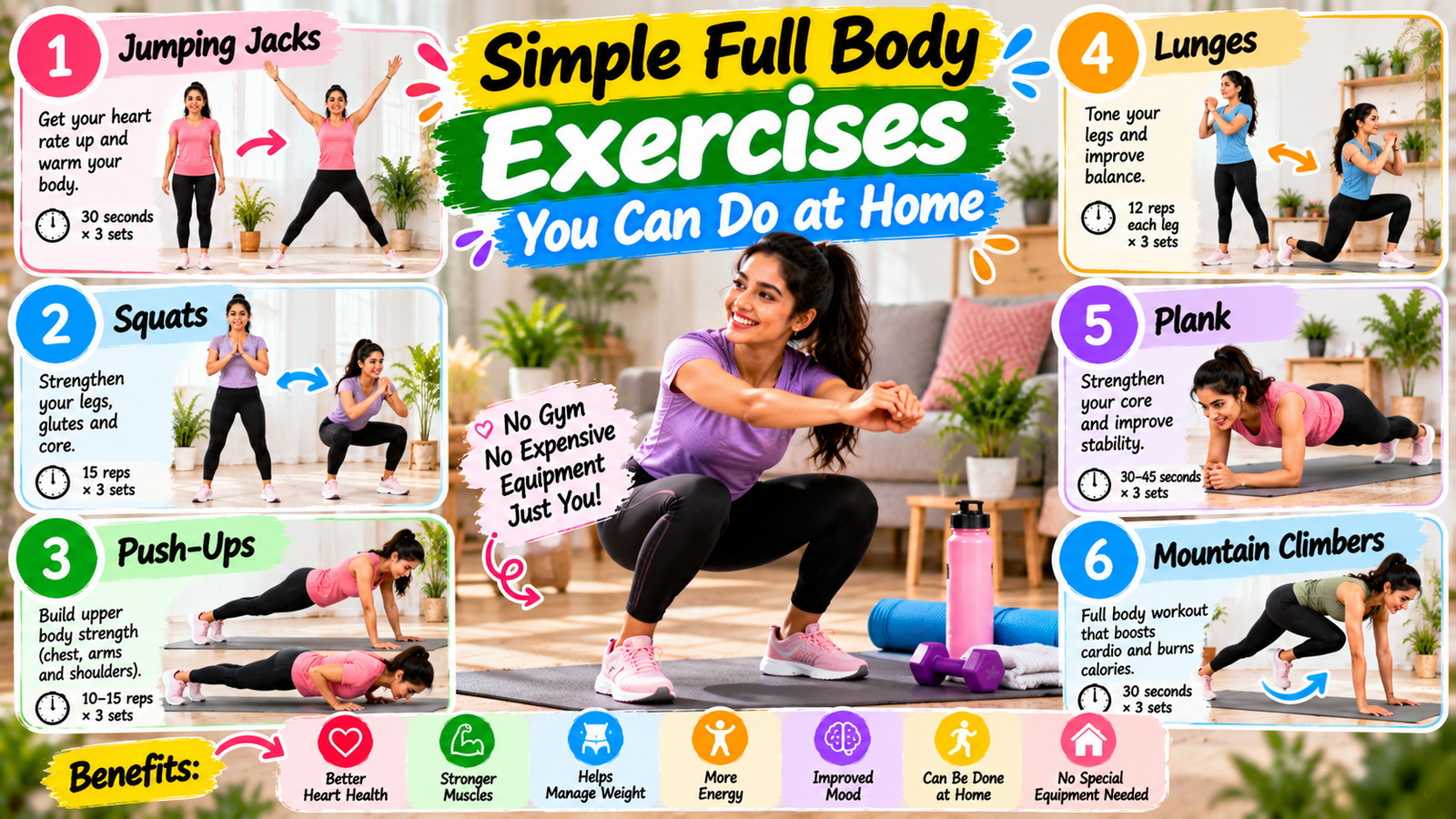
A full body workout at home can be much simpler than many people expect. You do not necessarily need a gym membership or a collection of fitness machines. With basic bodyweight exercises, you can create a practical home workout that involves several major muscle groups.
When I recommend full body exercises for beginners, I prefer movements that are easy to understand and can be modified. The goal should be to build confidence and consistency before worrying about advanced techniques.
Bodyweight Squats
Bodyweight squats are a useful exercise for the lower body. They involve the legs and hips while also requiring you to maintain a stable position.
Stand with your feet comfortably apart. Move your hips backward and bend your knees while keeping the movement controlled. Then return to standing.
Beginners can use a chair for additional support. Focus on comfortable range of motion rather than trying to squat as low as possible.
Wall Push Ups
Wall push ups are a beginner friendly upper body exercise.
Stand facing a wall and place your hands against it. Keep your body controlled as you bend your elbows and move toward the wall. Push yourself back to the starting position.
As your strength improves, you may eventually progress to more challenging push up variations.
Glute Bridges
Glute bridges can be performed on the floor and are useful for working the muscles around the hips and lower body.
Lie on your back with your knees bent. Place your feet on the floor and slowly raise your hips. Pause briefly if comfortable, then lower your hips with control.
Avoid rushing through the movement.
Marching in Place
Marching in place can add a simple cardiovascular element to a home workout.
Stand comfortably and alternate lifting your feet while moving your arms naturally.
You can increase or decrease the pace depending on how you feel.
Bird Dog
The bird dog introduces balance and controlled movement.
Start on your hands and knees. Extend one arm and the opposite leg while keeping your body stable. Return to the starting position and change sides.
Beginners can simplify the movement by extending only one limb at a time.
Calf Raises
Calf raises are easy to add to a home workout.
Stand near a wall or another stable surface. Slowly lift your heels and then lower them.
Use support if you need help maintaining balance.
Step Ups
If you have a safe and stable step that is appropriate for exercise, step ups can provide a useful lower body movement.
Step up carefully, bring the other foot up, then step down in a controlled way.
Safety is important. Never use an unstable object as an exercise platform.
Standing Knee Raises
Standing knee raises can add movement without requiring much space.
Stand upright and slowly raise one knee, then lower it and switch sides.
You can use a wall for balance if necessary.
Beginner Full Body Workout
A simple workout could begin with a few minutes of marching in place. Follow this with bodyweight squats, wall push ups, glute bridges, bird dogs, and calf raises.
You can perform a small number of repetitions for each movement and rest between exercises.
The routine should feel manageable rather than exhausting.
How Often Should Beginners Exercise?
There is no single schedule that works for everyone. Beginners should consider their current fitness level, daily routine, and recovery needs.
Starting with several short sessions each week can be more realistic than exercising intensely every day.
You can also remain active between workouts by walking and reducing long periods of sitting.
Focus on Proper Movement
When doing full body exercises at home, pay attention to technique.
Move slowly enough that you can control each repetition. Avoid trying to copy advanced workouts before you understand the basic movements.
If an exercise causes pain or feels unsafe, stop and reassess the movement.
Make Your Home Workout More Interesting
Doing the same exercises repeatedly can become boring. You can change the order of exercises, vary your walking routine, or include different beginner friendly movements.
Music can also make home workouts more enjoyable for some people.
The important thing is to keep your routine practical enough that you want to continue.
Final Thoughts
Simple full body exercises can provide a strong foundation for a beginner home workout. Squats, wall push ups, glute bridges, marching, bird dogs, calf raises, and other basic movements can be combined into a routine without expensive equipment.
From my perspective, beginners should focus on consistency before intensity. Learn the basic movements, start with manageable workouts, and gradually increase your activity as you become more comfortable.