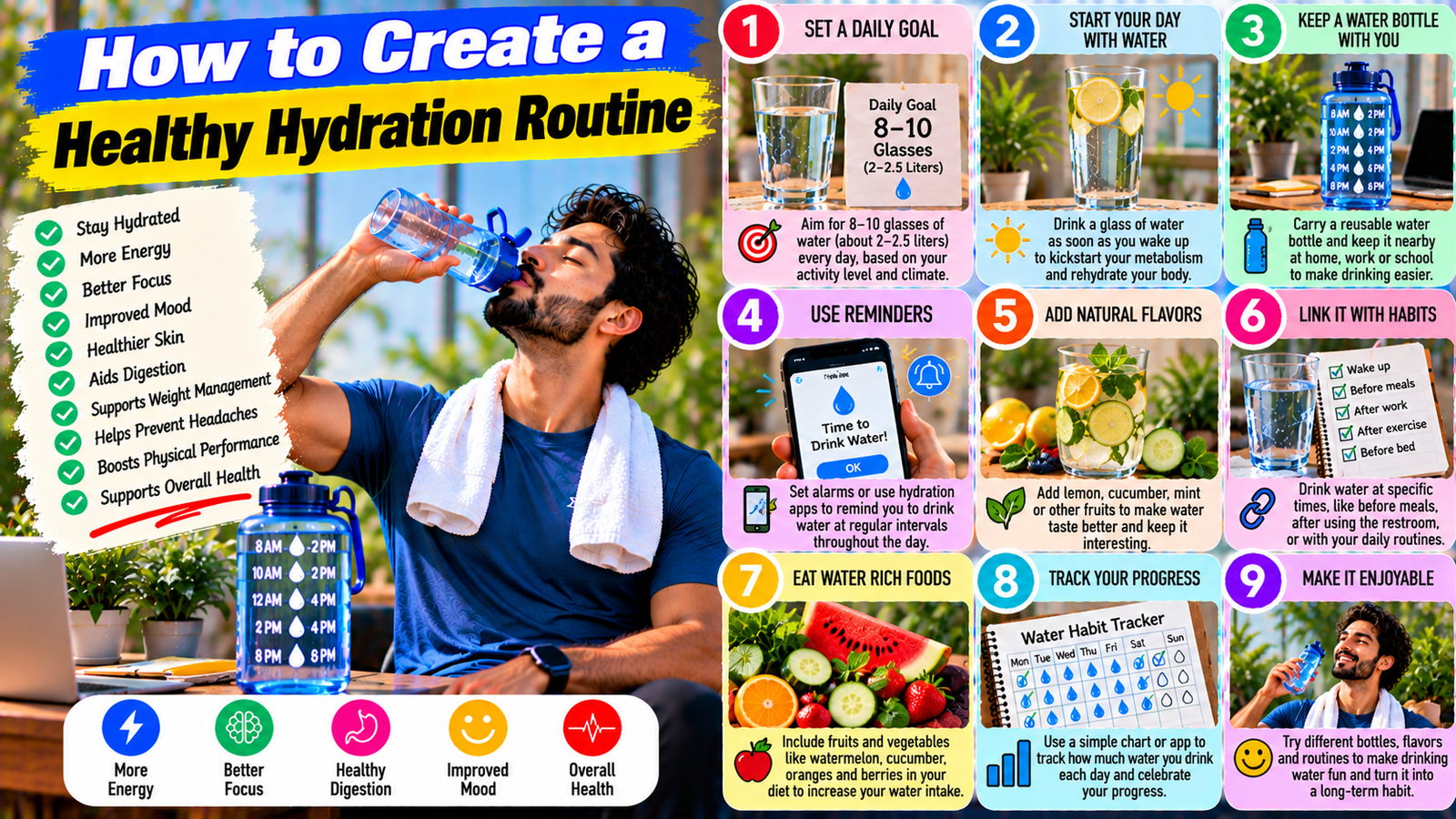
Creating a healthy hydration routine does not need to be complicated. In my opinion, the biggest challenge is usually remembering to drink regularly rather than understanding why hydration matters.
A good hydration routine should fit naturally into daily life. Instead of forcing myself to follow a complicated schedule, I prefer connecting water with activities I already do. This makes the habit easier to maintain over time.
Understand Your Personal Needs
Everyone does not need exactly the same amount of fluid every day.
Hydration needs can change depending on activity level, weather, diet, body size, and other individual factors. Exercise and hot conditions can increase fluid loss, while a quieter day may be different.
Because of this, I prefer using general awareness rather than following a rigid number without considering my circumstances.
Start With the Morning
Morning is a convenient place to begin a hydration routine.
After waking up, I can have some water before moving on with the day. I do not need to make this complicated. Simply keeping a glass or bottle nearby can make the habit easier.
This gives me a consistent starting point every day.
Drink Water With Meals
Meals provide natural reminders for hydration.
I can drink water with breakfast, lunch, and dinner. Since these activities are already part of my daily routine, adding water does not require much additional effort.
Over time, drinking water with meals can become automatic.
Keep Water Available
Accessibility is extremely important.
If water is sitting next to me, I am more likely to drink it. If I have to walk somewhere every time I want water, I may forget or postpone it.
I like keeping a reusable bottle nearby when working, studying, traveling, or doing household activities.
Create Regular Water Breaks
Busy schedules can make hydration easy to forget.
I can create simple water breaks throughout the day. These breaks can happen when I finish a task, take a short walk, check my phone, or step away from my computer.
The idea is to make hydration part of the rhythm of the day.
Adjust for Physical Activity
Exercise can increase fluid loss through sweating.
Before physical activity, I make sure water is available. During longer activities, I pay attention to how I feel and replace fluids as appropriate.
After exercise, drinking fluids can help replace what was lost.
People who participate in prolonged or intense exercise may have different hydration requirements, so individual needs should be considered.
Pay Attention During Hot Weather
Hot weather can increase the need to pay attention to fluids.
When temperatures are high, I try to keep water with me and drink regularly. Outdoor activities may require additional planning.
I also try to avoid waiting until I feel extremely thirsty before thinking about hydration.
Use Reminders if Necessary
There is nothing wrong with using technology to support a healthy habit.
A simple phone reminder can remind me to check whether I have had water recently. This can be especially useful during work or study sessions.
The reminder should support the routine rather than make it stressful.
Make Water Enjoyable
If I do not enjoy the taste of plain water, I can make small changes.
Adding lemon, lime, cucumber, mint, or fruit can provide natural flavor. Chilled water can also feel more refreshing during warm weather.
The goal is to find an approach that makes me want to drink water regularly.
Include Hydrating Foods
Some foods also contain significant amounts of water.
Fruits and vegetables such as watermelon, oranges, cucumber, tomatoes, strawberries, and lettuce can contribute to overall fluid intake.
I do not consider these a replacement for drinking water, but they can be part of a balanced diet that supports hydration.
Be Careful With Sugary Drinks
Sugary drinks can be easy to consume without thinking about the amount of added sugar they contain.
I prefer making water my main everyday drink and choosing other beverages thoughtfully.
Reading nutrition labels can help me understand what I am actually drinking.
Build the Routine Gradually
If my current hydration habits are inconsistent, I do not need to change everything in one day.
I can begin with a morning glass of water and water with meals. Once those habits become normal, I can add another reminder during the afternoon.
Gradual changes often feel easier to maintain.
Do Not Try to Catch Up All at Once
I think it is better to drink fluids regularly rather than waiting until the end of the day and trying to consume a large amount at once.
A consistent routine is more comfortable and easier to manage.
Hydration should feel like a normal part of the day rather than a task that has to be completed at the last minute.
Final Thoughts
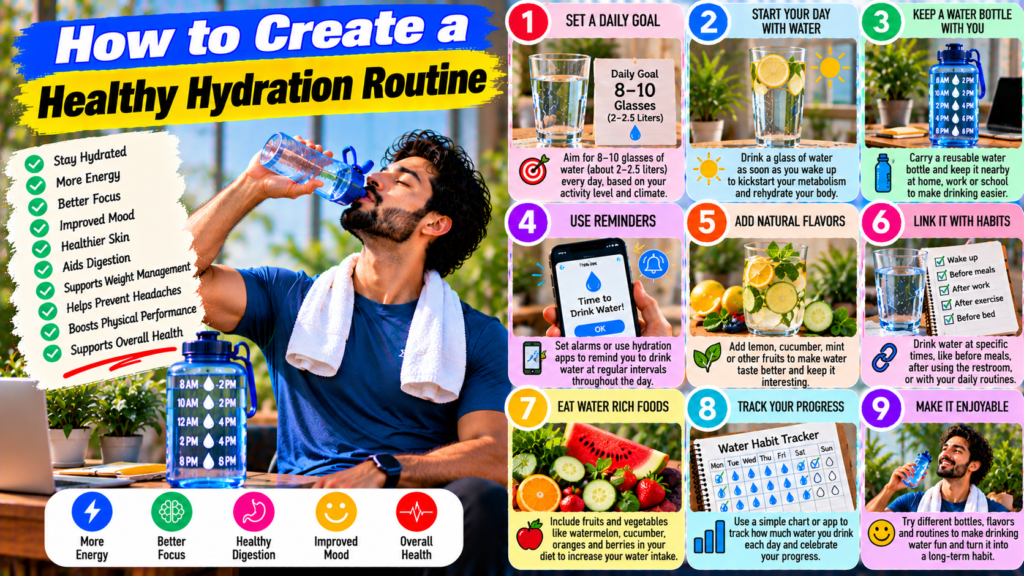
A healthy hydration routine is mainly about consistency and convenience. I can start the day with water, drink with meals, carry a bottle, create regular reminders, and adjust my routine during exercise or hot weather.
There is no need for complicated rules. The best routine is one that fits my daily schedule and is easy to repeat.
Individual hydration needs can vary, particularly for people with certain health conditions or those taking medications that affect fluid balance. In those situations, personalized guidance from a qualified healthcare professional is important.