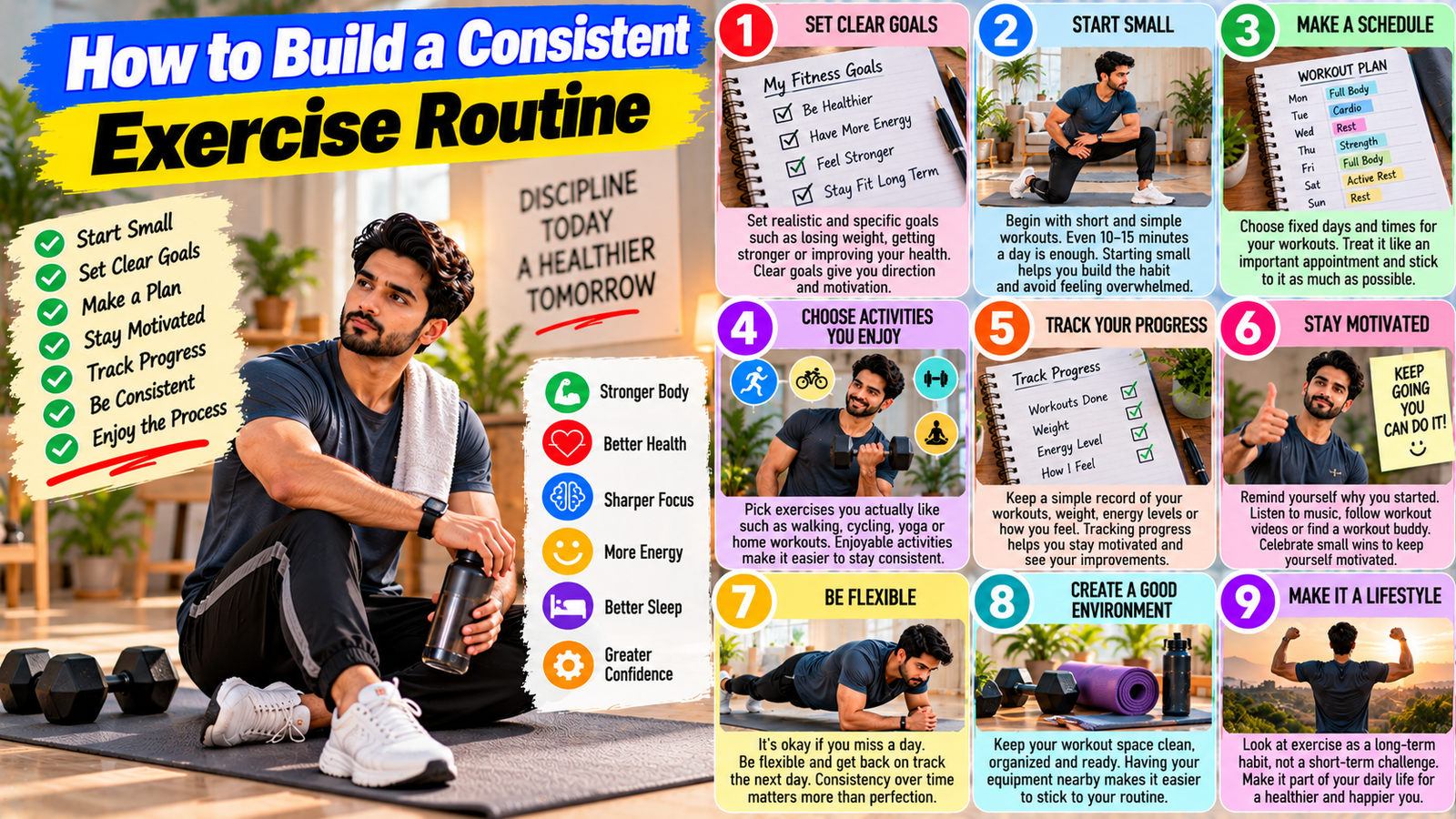
Starting an exercise routine is one thing, but staying consistent with it is another challenge. Many people begin exercising with a lot of motivation, follow a strict plan for a few days, and then slowly stop. In my opinion, the problem is often not a lack of motivation. The routine may simply be too difficult or unrealistic for their lifestyle.
Building a consistent exercise routine is about creating habits that you can maintain over time. You do not need to exercise perfectly every day. Instead, you need a realistic plan that fits your schedule and gradually becomes part of your normal lifestyle.
Start With a Simple Goal
The first step is choosing a clear and realistic goal.
Your goal might be to exercise three times a week, walk every evening, improve your strength, or become more physically active.
Avoid setting too many goals at once.
A simple goal gives you something specific to work toward and makes it easier to measure your progress.
Choose a Realistic Schedule
Your exercise routine should fit your daily life.
If you know that mornings are extremely busy, do not create a plan that requires you to exercise at 5 AM every day.
Choose a time when you are more likely to have enough energy and free time.
For some people, this may be morning. For others, it may be afternoon or evening.
The best exercise schedule is the one you can realistically follow.
Begin With Three Days a Week
If you are new to exercise, three workout days per week can be a reasonable starting point.
For example, you might exercise on Monday, Wednesday, and Friday.
On the other days, you can take walks or simply focus on normal daily movement.
Starting with fewer workout days can make the routine feel manageable.
You can increase your activity later if you want to.
Keep Workouts Short
Long workouts are not necessary when building consistency.
A 20 minute workout may be easier to fit into your day than a 60 minute session.
When you successfully complete a short workout, you also build confidence.
Over time, you can increase the duration if your schedule and fitness level allow it.
Prepare in Advance
Preparation can make exercise easier.
Keep your workout clothes ready. Decide which exercises you will perform. Prepare your workout area before starting.
These small steps reduce the number of decisions you have to make.
If everything is ready, it can be easier to begin instead of finding reasons to postpone the workout.
Create a Simple Workout Plan
A consistent exercise routine should not be confusing.
You can choose several basic movements that work different parts of your body.
For example, your routine might include squats, wall push ups, glute bridges, a beginner core exercise, and walking.
You can repeat this basic routine for several weeks before changing it.
Learning a small group of exercises can also help you improve your technique.
Track Your Progress
Tracking your workouts can help you see improvement.
You can write down the date, exercises, repetitions, workout duration, or walking time.
You do not need an expensive fitness application.
A simple notebook can be enough.
Seeing your progress over several weeks can provide motivation, especially when changes in fitness are not immediately visible.
Do Not Depend Only on Motivation
Motivation changes from day to day.
Some days you may feel excited about exercising. Other days you may want to skip it.
This is why building habits is important.
Try to exercise at the same time on certain days so that it becomes part of your routine.
Eventually, exercise can become something you do automatically rather than something you have to constantly convince yourself to do.
Make Exercise Enjoyable
Enjoyment can make consistency easier.
Choose activities you actually like.
If you enjoy walking, include more walking. If you like home workouts, build your routine around them. If you enjoy cycling or recreational sports, use those activities as part of your fitness routine.
Exercise does not have to feel like punishment.
Allow Flexibility
A consistent routine does not mean following the exact same schedule every day.
Unexpected responsibilities can appear.
If you miss a workout, do not assume the entire week is ruined.
Simply adjust your schedule and continue.
For example, if you planned to exercise on Wednesday but became busy, you could move the workout to Thursday.
Flexibility can help you maintain the routine during busy periods.
Take Rest Days
Rest is part of a sustainable exercise routine.
Your body needs time to recover, especially after strength workouts.
Rest days can include normal daily movement or gentle walking if you feel comfortable.
Do not feel guilty about taking a recovery day.
Rest can help you return to your workouts with better energy.
Increase Difficulty Gradually
Once your routine becomes comfortable, you can gradually make it more challenging.
You might add repetitions, increase workout duration, or choose a slightly more difficult exercise variation.
Avoid making major increases suddenly.
Gradual progress gives your body time to adapt.
Avoid Comparing Your Progress
Everyone starts at a different fitness level.
Someone else may be able to run for an hour or perform advanced exercises, while you may be starting with a ten minute walk.
That is completely fine.
Compare your current ability with where you were before.
Personal progress is what matters.
Recover After Missed Workouts
Missing workouts is normal.
The important thing is what you do afterward.
Instead of waiting for the next Monday or the beginning of a new month, simply return to your routine at the next suitable opportunity.
One missed workout does not erase your previous progress.
Build Exercise Into Your Lifestyle
The strongest exercise routines become part of everyday life.
Walk more when practical. Take movement breaks during long periods of sitting. Use your home for short workouts. Spend time outdoors.
These habits can support your formal exercise sessions.
When physical activity becomes a normal part of your lifestyle, consistency can become much easier.
Final Thoughts
Building a consistent exercise routine takes time. The goal is not to create the hardest workout plan possible. The goal is to create a routine that you can realistically follow for months and years.
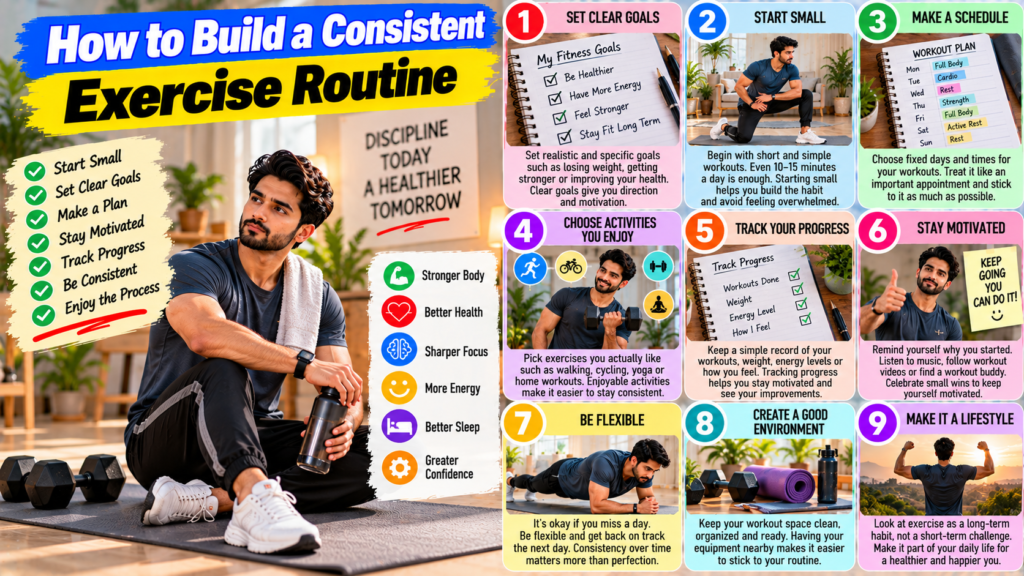
Start with small goals, choose a convenient schedule, keep workouts manageable, track your progress, and allow yourself flexibility.
Do not depend entirely on motivation. Build habits that make exercise easier to repeat.
In my opinion, consistency is one of the most important parts of improving fitness. A simple routine followed regularly can provide a much stronger foundation than an intense plan that only lasts for a few days.
Start small, stay patient, and focus on making exercise a normal part of your life.