Creating a beginner workout routine does not have to be complicated. In fact, I believe a simple routine is often easier to follow than a detailed program filled with difficult exercises.
When someone is new to exercise, the main objective should be developing consistency. Once regular exercise becomes a habit, it becomes much easier to improve strength, endurance, and overall fitness.
A beginner workout routine should match your current ability, schedule, and personal preferences.
Decide What You Want From Exercise
Start by thinking about your main reason for exercising.
You might want to become more physically active, build strength, improve endurance, support general fitness, or simply create healthier daily habits.
Having a clear purpose can make it easier to choose appropriate activities.
Choose a Realistic Schedule
The best workout schedule is one that fits your life.
If you are busy, you may prefer shorter workouts several times a week. If you have more free time, you can create longer sessions.
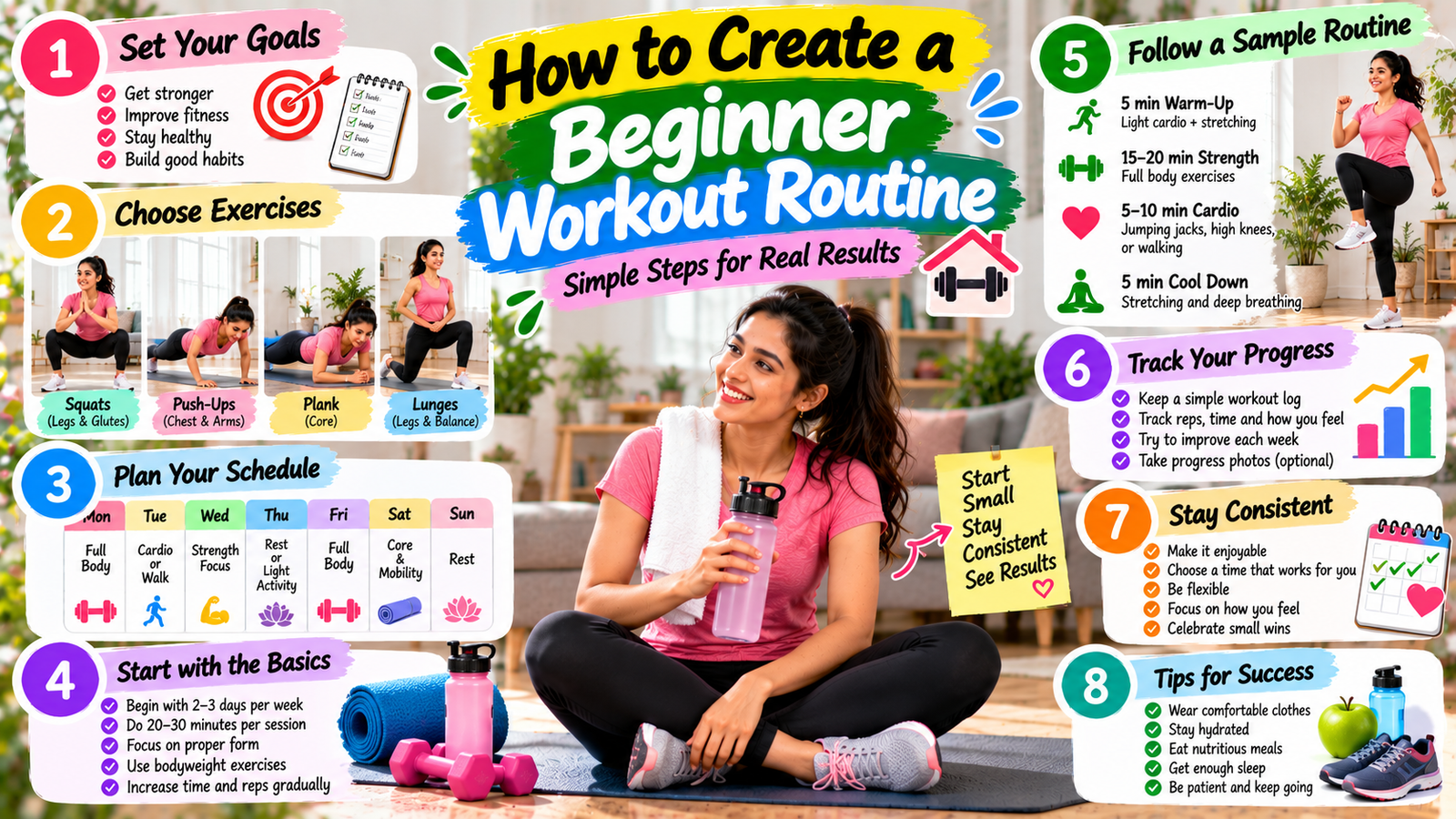
For many beginners, starting with three workout days per week can provide a simple structure.
You can leave recovery days between workouts depending on your routine and fitness level.
Start With a Warm Up
Every beginner workout can start with several minutes of easy movement.
March in place, walk around your home, or perform gentle mobility exercises.
The purpose is to gradually prepare yourself for the workout.
Include Basic Strength Exercises
A beginner workout routine can include simple bodyweight exercises.
Chair squats or bodyweight squats can work the lower body. Wall push ups can provide an accessible upper body movement. Glute bridges can work the hips and lower body.
You do not need a large collection of exercises.
Start with a few movements that you can perform comfortably.
Add Cardiovascular Activity
Walking is an excellent option for beginners.
You can walk outdoors or indoors depending on your circumstances. Marching in place is another option when space is limited.
The goal is to include some activity that gets your body moving continuously.
Include Mobility and Stretching
Gentle mobility exercises and stretching can be included in your routine, particularly around your workouts.
Keep movements controlled and comfortable.
There is no need to force your body into extreme positions.
Create a Simple Weekly Plan
One possible beginner schedule could involve strength exercises on Monday, walking or light activity on Tuesday, another workout on Wednesday, easier activity on Thursday, a workout on Friday, and relaxed movement during the weekend.
This is only an example. Your own schedule should reflect your lifestyle and fitness level.
Keep Your First Workouts Short
Many beginners believe that a workout needs to last an hour to be worthwhile.
I disagree with that approach for someone who is just starting.
A short workout that you complete consistently is often more practical than an ambitious routine that you cannot maintain.
Start with a duration that feels manageable and increase it gradually.
Increase Difficulty Slowly
Once your routine begins to feel easier, you can make small changes.
You might add a few repetitions, increase your walking time, or include another exercise.
Do not change everything at once.
Gradual progression gives you time to adapt and helps keep the routine manageable.
Keep Rest Days
Rest is part of a beginner fitness routine.
Your body needs recovery time, especially when you introduce movements that you are not used to.
Rest days do not mean you have to remain completely inactive. Gentle walking and normal daily movement can still be part of your lifestyle when appropriate.
Track Your Workouts
A simple workout log can help you understand your progress.
Write down the date, exercises, repetitions, and how you felt.
Over time, you may notice that exercises become easier or that you can remain active for longer.
These improvements can provide motivation.
Avoid Making the Routine Too Complicated
There are thousands of exercises available online. It can be tempting to keep adding new movements.
For beginners, this can create unnecessary confusion.
A routine with a few basic exercises can be enough to start.
Once you understand the fundamentals, you can explore additional exercises if you want more variety.
Make Exercise Convenient
If your workout requires too much preparation, you may be less likely to do it.
Keep your exercise area ready. Choose a regular workout time. Wear comfortable clothing and shoes appropriate for the activity.
Making exercise convenient removes some of the barriers that can prevent consistency.
Stay Flexible
Life does not always follow a schedule.
You may miss a workout because of work, family responsibilities, travel, or other commitments.
Do not assume that missing one session means your entire routine has failed.
Simply return to your schedule when you can.
Listen to Your Body
A beginner workout should be challenging enough to encourage improvement but not so difficult that you feel pressured to ignore pain.
If you experience significant pain, dizziness, or other concerning symptoms, stop exercising and seek appropriate medical guidance.
If you have an existing health condition or injury, discuss your exercise plans with a qualified healthcare professional.
Final Thoughts
Learning how to create a beginner workout routine is mainly about keeping things realistic. Choose a few basic exercises, add some walking or other cardiovascular activity, include recovery days, and gradually increase your activity.
From my point of view, the best workout routine is not the most complicated one. It is the one that fits your lifestyle and can be followed consistently.
Start small, stay patient, and give yourself time to improve. Building a regular exercise habit is a process, and every completed workout is a step toward becoming more active.