Staying hydrated is one of the simplest things I can do for my daily health, yet it is also something that is easy to forget. With work, household tasks, travel, exercise, and other responsibilities, drinking enough water can sometimes become an afterthought. I have found that when I make hydration part of my daily routine, it becomes much easier to stay consistent.
Water plays an important role in many normal functions of the body. From supporting digestion to helping regulate body temperature, proper hydration can make a difference in how we feel throughout the day. We do not need complicated routines or expensive products to improve our hydration habits. In many cases, simply paying more attention to our water intake can be a useful starting point.
What Does Staying Hydrated Mean?
Staying hydrated means giving your body enough fluids to support its normal functions. Water is one of the main sources of hydration, although fluids also come from foods and other beverages.
Our bodies naturally lose water throughout the day through breathing, sweating, and normal bathroom use. The amount of fluid a person needs can vary depending on factors such as activity level, weather, diet, and individual needs.
This is why I do not think there is one exact amount of water that everyone must drink every day. Instead, I prefer to focus on regular fluid intake and paying attention to signs that I may need more water.
Why Water Is Important Every Day
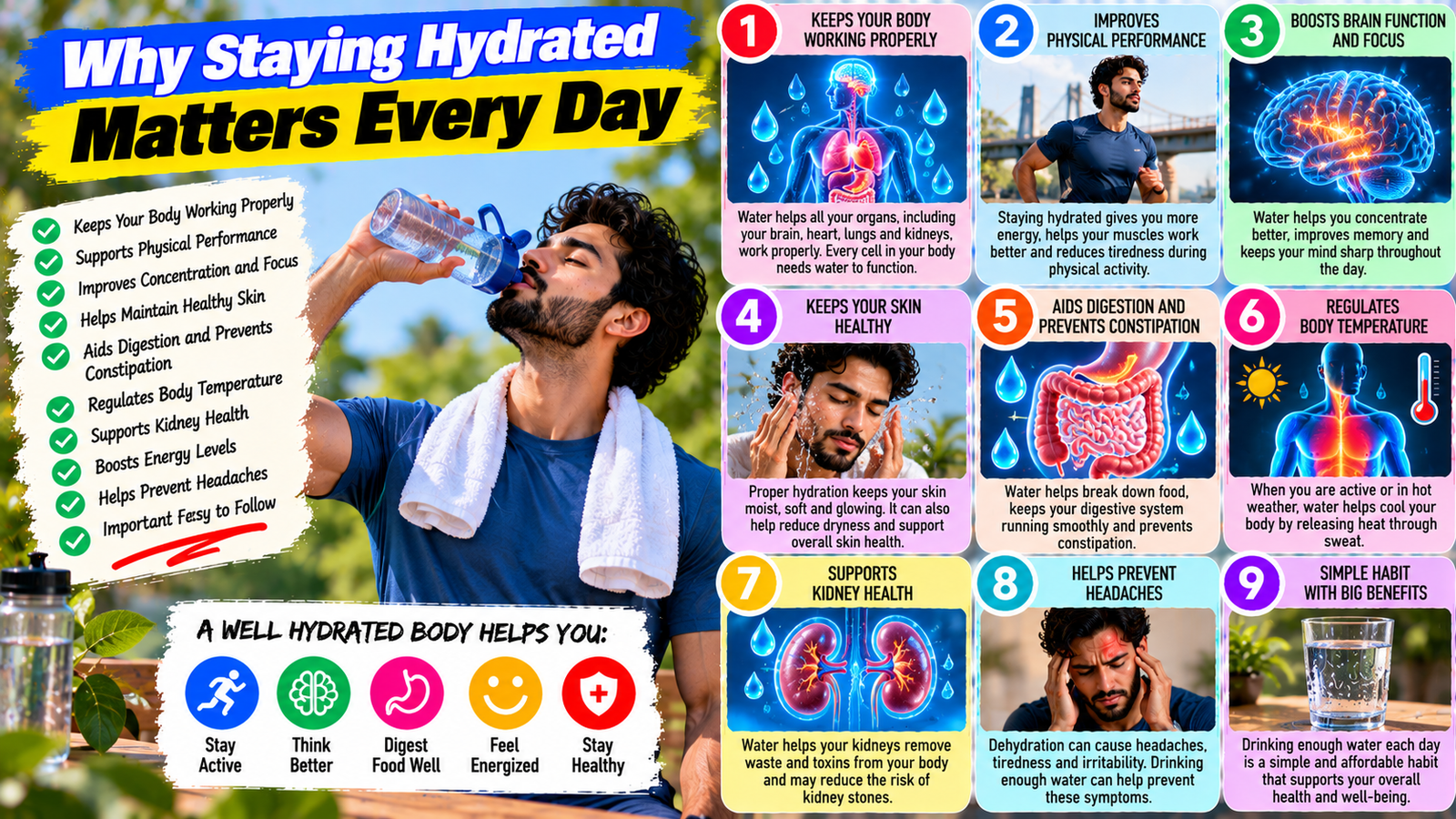
Water supports many processes in the body. It helps transport nutrients, supports normal digestion, and plays a role in maintaining body temperature.
When the weather is hot or when I am physically active, I pay extra attention to hydration because the body can lose more fluid through sweating. Drinking water regularly can help replace some of that lost fluid.
Hydration is also important during ordinary days when I am not exercising. Even simple activities can contribute to daily fluid loss, which is why drinking water should not only be something we think about after physical activity.
Hydration and Energy
One reason I try to stay hydrated is that dehydration can make a person feel tired or less comfortable. When I have gone too long without drinking water, I sometimes notice that I feel less focused and less energetic.
Water itself does not provide calories or act like a stimulant, but maintaining normal hydration supports the body’s regular functions. If I am feeling tired during the day, I consider basic needs such as water, food, movement, and rest rather than immediately reaching for another caffeinated drink.
Hydration and Digestion
Water is also important for normal digestion. Fluids work together with fiber and other parts of the diet to support regular bowel function.
For this reason, I like to combine good hydration with a balanced diet that includes fruits, vegetables, whole grains, and other nutritious foods. Drinking water is helpful, but it works best as part of an overall healthy lifestyle.
Staying Hydrated in Hot Weather
Hot weather can make hydration especially important because the body may lose more fluid through sweating. This is something I pay particular attention to during warmer months.
I try to keep water available when I am outside or spending time in a warm environment. Instead of waiting until I feel extremely thirsty, I prefer to drink water regularly throughout the day.
People who exercise outdoors or spend long periods in hot conditions may need to pay even closer attention to their fluid intake.
Hydration During Exercise
Exercise increases the body’s need to replace fluids lost through sweating. The amount needed depends on the type and duration of exercise, the weather, and individual factors.
For light daily activity, plain water is often a convenient choice. During longer or more intense activities, individual hydration needs can be different.
I think the main lesson for beginners is simple. Do not ignore water when you are exercising. Keep a bottle nearby and make drinking fluids part of your activity routine.
How to Know You May Need More Water
Thirst is one natural signal that the body needs fluids. Other changes can also encourage us to pay more attention to hydration.
For example, urine that is darker than usual can sometimes be a sign that more fluids may be needed, although urine color can also be affected by foods, medications, and other factors.
Rather than becoming obsessed with tracking every glass, I find it more practical to build a regular drinking habit.
Simple Ways to Stay Hydrated
Keeping water nearby is one of my favorite strategies. If a bottle is sitting next to me, I am much more likely to drink from it.
Another simple idea is to drink water around regular daily activities. For example, I can have a glass after waking up, with meals, during work breaks, and after physical activity.
Eating foods with high water content can also contribute to fluid intake. Fruits and vegetables can be useful additions to a balanced diet.
Do Other Drinks Count?
Many beverages contain water and can contribute to daily fluid intake. However, water is a simple choice because it does not contain added sugar or unnecessary calories.
I try not to depend heavily on sugary drinks for hydration. They can add a significant amount of sugar to the diet without providing the same nutritional value as water and nutritious foods.
Making Hydration a Daily Priority
The biggest benefit of creating a hydration habit is consistency. Instead of thinking about water only when I feel thirsty, I try to make drinking fluids a normal part of my schedule.
A water bottle on my desk, a glass beside my meals, and regular reminders can all make this easier.
I also think it is important not to turn hydration into a stressful task. Everyone has different needs, and certain medical conditions can affect how much fluid a person should consume. Anyone with specific health concerns should follow advice from a qualified healthcare professional.

Final Thoughts
Staying hydrated matters every day because water supports many of the body’s normal functions. It helps with temperature regulation, digestion, nutrient transport, and general daily functioning.
For me, the easiest approach is to make water accessible and drink it regularly throughout the day. Small habits can make hydration feel natural instead of something I have to remember constantly.
Good hydration does not need to be complicated. Keeping water nearby, drinking with meals, carrying a bottle, and paying attention to your body’s signals are simple steps that can help make drinking enough fluids a regular part of everyday life.