
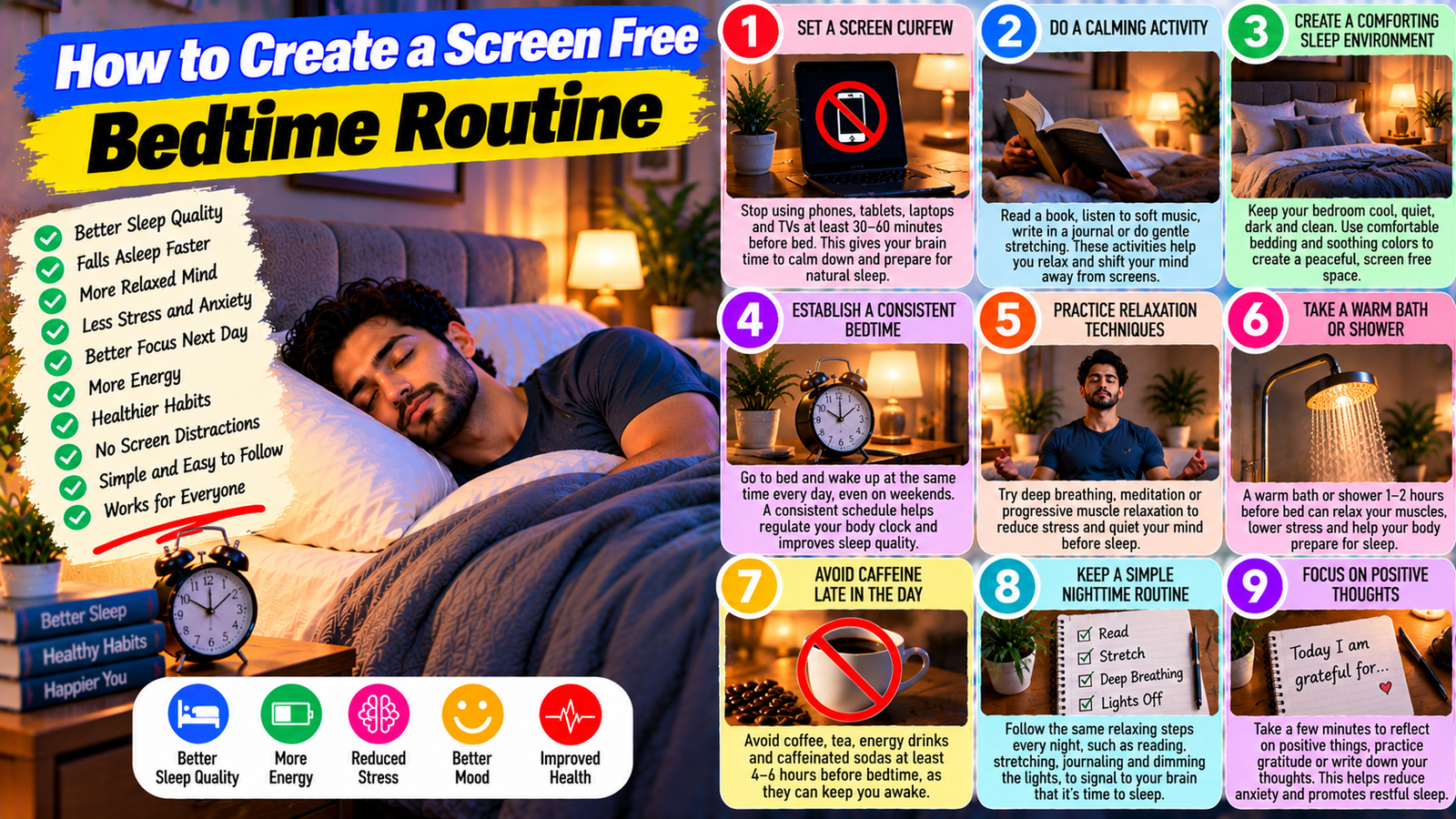
Screens have become a normal part of everyday life. We use phones, computers, tablets, televisions, and other devices for work, communication, entertainment, and learning. However, using screens continuously into the late evening can make it harder for some people to mentally switch from daytime activities to bedtime.
Creating a screen free bedtime routine can be a simple way to make your evenings calmer. In my opinion, the goal does not have to be completely avoiding technology every evening. Instead, create a period before bed where unnecessary screen use is reduced or removed.
Decide When Your Screen Free Time Begins
The first step is choosing a time when you will stop unnecessary screen use.
For example, you might decide that the final 30 to 60 minutes before bed will be screen free.
You can adjust this based on your lifestyle.
If you currently use your phone until the moment you fall asleep, even a short screen free period can be a useful starting point.
Put Your Phone Away
Phones are often the hardest device to ignore because they contain messages, social media, videos, games, and endless information.
Try placing your phone somewhere away from your bed.
If you need it for an alarm, keep it at a reasonable distance so you are not tempted to constantly check it.
You can also reduce unnecessary notifications during your nighttime routine.
Replace Scrolling With Reading
Reading a physical book can be a simple replacement for phone scrolling.
Choose something enjoyable and relaxing.
You do not have to read for an hour.
Even 15 or 20 minutes can provide a quiet activity before bedtime.
If reading does not interest you, choose another screen free activity that you enjoy.
Prepare for Tomorrow
A screen free period can also be used to prepare for the next day.
You can choose your clothes, organize your bag, prepare work materials, or write down important tasks.
Completing these tasks before bed can reduce the number of things you need to think about once you are lying down.
Try Gentle Stretching
Gentle stretching can be a useful screen free activity.
You can stretch your legs, shoulders, arms, and back.
Keep the movements slow and comfortable.
The purpose is to relax rather than complete a difficult workout.
Spend Time Talking With Family
If you live with family members, the screen free period can become an opportunity to talk.
You can have a simple conversation, help with household tasks, or spend quiet time together.
This can make the evening feel more connected and less focused on devices.
Write in a Journal
Writing in a notebook can be another useful alternative to screen use.
You can write about your day, list tomorrow’s tasks, or simply record a few thoughts.
You do not need to write a long entry.
The main purpose is to give your mind something calm to focus on without using a digital device.
Keep Your Bedroom Free From Entertainment
If possible, avoid turning the bedroom into an entertainment center.
Watching videos or playing games in bed can make it easier to stay awake much longer than planned.
Keeping the bedroom focused on rest can make the space feel more relaxing.
Create a Simple Routine
Your screen free bedtime routine should be easy to remember.
For example, you could stop using your phone, prepare your clothes for tomorrow, brush your teeth, read a book, stretch gently, and then go to bed.
Repeating the same sequence can make it easier to follow.
Make the Transition Gradual
If you spend several hours on screens every evening, suddenly stopping may feel difficult.
Start by reducing screen use for a short period.
Once you become comfortable with that, gradually increase your screen free time.
This approach may feel more realistic than trying to make a dramatic change overnight.
Tell Others About Your Routine
If friends or family members regularly message you late at night, let them know that you are trying to reduce screen use before bed.
You do not need to respond immediately to every message.
Setting personal boundaries around nighttime communication can make your routine easier.
Use a Traditional Alarm Clock
If your phone is one of your biggest distractions, a basic alarm clock can be useful.
This allows you to keep your phone farther away from your bed.
You may find that you naturally check your phone less when it is not within easy reach.
Avoid Replacing One Screen With Another
A screen free bedtime routine only works if you actually reduce screens.
Switching from your phone to a television or tablet may not provide the same quiet environment.
Try choosing genuinely screen free activities.
Be Flexible
You do not need to follow the routine perfectly every night.
Travel, work, family responsibilities, and special occasions can change your schedule.
The important thing is returning to your routine when possible.
Final Thoughts
Creating a screen free bedtime routine can be a practical way to make your evenings calmer.
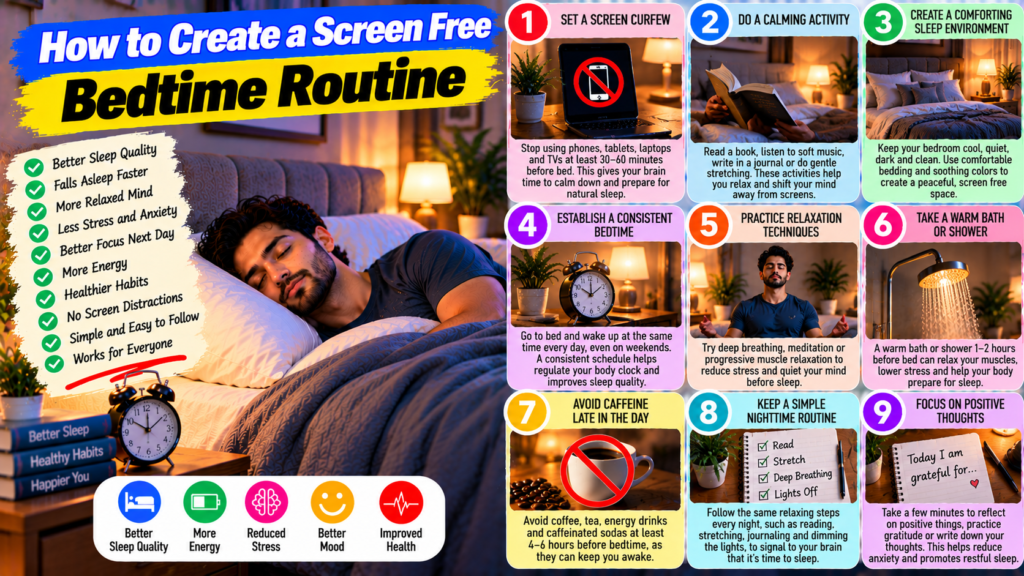
Start by choosing a screen free period before bed. Put your phone away, replace scrolling with reading, prepare for tomorrow, stretch gently, write in a journal, or spend time talking with family.
In my opinion, the biggest benefit is creating a clear boundary between digital activity and rest.
You do not need to completely remove technology from your life. Simply creating a peaceful period without unnecessary screens can make your nighttime routine feel more intentional and relaxing.