
Remembering to drink water can be surprisingly difficult when the day becomes busy. I can start the morning with good intentions and then realize several hours later that I have barely had anything to drink.
The good news is that I do not have to depend entirely on memory. There are simple ways to create reminders throughout the day. By connecting water with regular activities, I can make hydration a natural part of my routine.
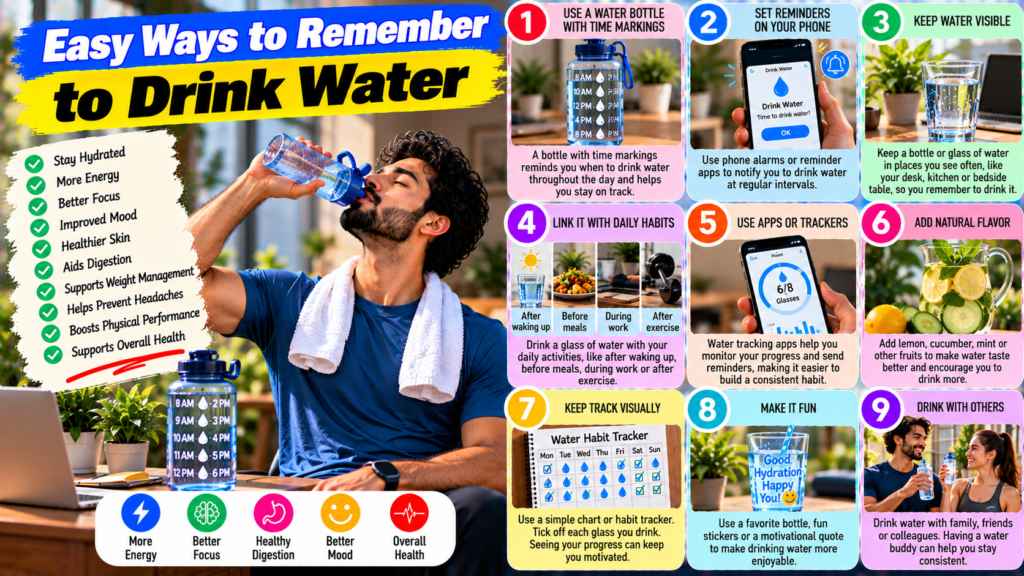
Keep Water in Sight
One of the simplest reminders is visibility.
When I keep a bottle on my desk or beside me, I see it throughout the day. That visual reminder can encourage me to take a drink without needing an alarm.
If the bottle is stored somewhere I cannot see it, it becomes much easier to forget.
Use Phone Reminders
Phone reminders can be helpful when my schedule is unpredictable.
I can set a few reminders during the day to encourage regular water breaks. These reminders do not need to be frequent or complicated.
The purpose is simply to create a small prompt that brings hydration back to my attention.
Drink Water When You Wake Up
The morning provides an easy opportunity to establish a water reminder.
I can keep a glass or bottle ready and drink some water after waking up. This creates a consistent starting point for my daily hydration routine.
Once this becomes automatic, it can serve as the first anchor in my water drinking habit.
Drink Water With Every Meal
Meals are another reliable reminder.
Breakfast, lunch, and dinner happen at predictable times for many people. Having water with meals makes it easier to remember.
I find that this approach works because I am not trying to remember a completely separate task. Water simply becomes part of eating.
Drink Water During Work Breaks
If I spend long periods working, studying, or using a computer, breaks can become hydration reminders.
Whenever I stand up, stretch, or take a short break, I can also drink some water.
This combines two useful habits and can make hydration easier to remember.
Carry a Reusable Water Bottle
A reusable water bottle gives me a constant reminder and makes water more accessible.
I can take it to work, school, the gym, or while traveling. Having water available means I do not have to search for a drink every time I feel thirsty.
The best bottle is one that I actually enjoy carrying and using.
Create a Simple Routine
A routine can reduce the amount of thinking required.
For example, I can associate water with waking up, breakfast, starting work, lunch, afternoon breaks, exercise, dinner, and my evening routine.
These moments become natural reminders throughout the day.
Use Visual Cues
Visual cues are not limited to water bottles.
A glass of water beside my computer, a note on my desk, or a reminder near the kitchen can all encourage me to drink.
The key is placing the cue where I will actually notice it.
Make Water More Appealing
Sometimes I remember water but do not feel interested in drinking plain water.
Adding natural flavors can make a difference. Lemon, mint, cucumber, orange, or berries can provide a refreshing taste.
Cold water can also be more appealing during warm weather.
Keep Water Near Your Bed
Keeping water near the bed can be convenient for people who like having fluids available at night or first thing in the morning.
However, individual routines differ, and drinking a large amount immediately before sleeping may interrupt sleep for some people.
I prefer to focus on regular hydration during the daytime rather than trying to catch up at night.
Use a Simple Tracking System
A simple tracking method can make me more aware of my habits.
I can make small marks in my phone or notebook each time I refill my bottle. Some bottles also have measurement markings that provide a visual guide.
Tracking can be useful, but I would not let it become stressful. Individual fluid needs vary, so the goal should be developing a healthy routine.
Remember Water During Travel
Travel can easily disrupt normal habits.
When I leave home, I try to take water with me when practical. This keeps hydration from depending entirely on finding a drink later.
During long trips or outdoor activities, I pay additional attention to fluids because weather and physical activity can change hydration needs.
Use Existing Habits as Reminders
This is one of my favorite strategies.
Instead of creating ten new reminders, I connect water with habits that already exist. For example, after checking my email, I can take a drink. After finishing a meeting, I can refill my bottle. Before leaving the house, I can check whether I have water.
These small connections can make hydration much easier to remember.
Final Thoughts
Remembering to drink water does not need to be complicated. A visible bottle, phone reminders, regular meals, work breaks, and simple routines can all help.
I believe the best approach is to create several small reminders rather than depending on one perfect system. When hydration becomes connected to things I already do, drinking water starts to feel automatic.
If you have a medical condition or take medication that affects fluid balance, follow the advice of your healthcare professional regarding your individual fluid needs.