Starting the morning with some physical activity can be a great way to become more active throughout the day. You do not need to visit a gym or spend a lot of time exercising. There are many easy morning exercises that you can do at home using little or no equipment.
In my experience, the biggest advantage of morning exercise is that it can help create a positive routine before the day becomes busy. Even a short workout can give you an opportunity to move your body and prepare yourself for the activities ahead.
The key is to keep your morning workout simple enough that you can actually follow it regularly.
Start With Gentle Movement
When you first wake up, your body may feel stiff or inactive. Instead of immediately performing difficult exercises, begin with gentle movement.
You can walk around your room, move your arms, rotate your shoulders, and gently move your legs.
Spend about five minutes getting your body moving before beginning your main exercises.
This is especially useful if you have spent a long time sleeping and want to gradually transition into physical activity.
Try Marching in Place
Marching in place is one of the easiest morning exercises to try at home.
Stand comfortably and lift one foot at a time while moving your arms naturally. You can continue for one or two minutes at a comfortable pace.
As your fitness improves, you can increase the speed slightly or continue for a longer period.
Marching in place is useful because it requires very little space and does not require special equipment.
Perform Bodyweight Squats
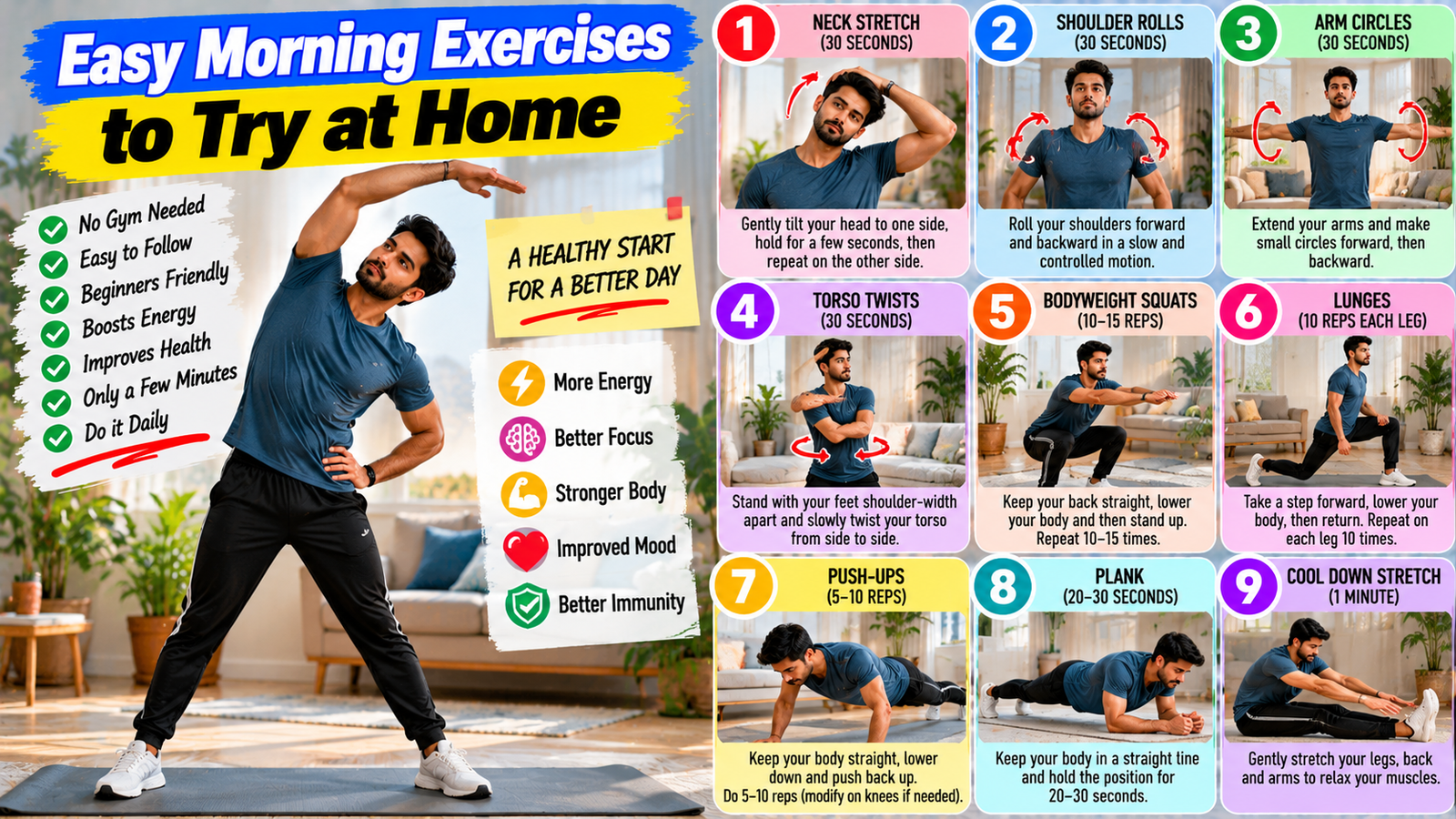
Bodyweight squats are another simple exercise for a morning workout. They work several muscles in the lower body and can help improve basic strength.
Stand with your feet approximately shoulder width apart. Slowly bend your knees and lower your body while keeping your movement controlled. Then return to a standing position.
If regular squats feel difficult, you can use a chair for support.
Start with a small number of repetitions and focus on good technique.
Add Wall Push Ups
Traditional push ups can be challenging for beginners, especially first thing in the morning. Wall push ups provide an easier alternative.
Stand facing a wall and place your hands against it. Slowly bend your elbows to bring your upper body closer to the wall, then push yourself back.
This movement can help beginners work their chest, shoulders, and arms without placing as much demand on the body as a traditional push up.
As you become stronger, you can eventually progress to more challenging variations.
Try Glute Bridges
Glute bridges are a simple floor exercise that targets the hips and lower body.
Lie on your back with your knees bent and feet placed comfortably on the floor. Slowly lift your hips, pause briefly, and then lower them back down.
Perform the movement slowly rather than trying to rush through repetitions.
This can be a useful addition to a beginner morning workout because it does not require equipment.
Include Gentle Stretching
Morning stretching can help you move more comfortably after waking up.
You can gently stretch your arms, shoulders, legs, and back. Avoid forcing a stretch or making sudden movements.
Simple stretching can also provide a calm transition between waking up and beginning your daily activities.
I personally think beginners benefit from keeping stretching comfortable rather than trying to achieve advanced flexibility.
Try a Short Plank
A plank can be included in a beginner morning workout to strengthen the core.
If a traditional plank is too difficult, begin with a modified version using your knees for support.
Hold the position for a short period while maintaining comfortable body alignment. You do not need to hold a plank for several minutes to benefit from practicing it.
Start with a duration that feels manageable and increase it gradually.
Create a Ten Minute Morning Routine
You do not need a long workout to become more active.
A simple ten minute routine could include two minutes of marching in place, ten bodyweight squats, several wall push ups, ten glute bridges, and a short plank.
You can repeat some movements if you still have time and energy.
The goal is not to exhaust yourself before starting the day. The goal is to establish a consistent habit of movement.
Exercise at Your Own Pace
Everyone has a different fitness level. Some people may feel comfortable exercising for 30 minutes in the morning, while others may prefer ten minutes.
Both approaches can be useful if they help you remain active.
If you are a complete beginner, do not feel pressured to copy advanced workout routines you see online.
Start where you are and gradually improve.
Stay Hydrated
Drinking enough fluids throughout the day is important, especially if you are exercising regularly.
You can keep a glass or bottle of water nearby and drink according to your needs.
If your workout is short and gentle, you may not need to make hydration complicated. Simply develop the habit of drinking enough fluids during the day.
Make Morning Exercise Convenient
One of the best ways to maintain a morning exercise habit is to make it easy.
Prepare comfortable workout clothes before going to bed. Keep enough space available for your exercises. Decide which exercises you will perform before waking up.
When there are fewer decisions to make in the morning, it can become easier to start.
You can also choose a consistent time for your morning workout.
Do Not Worry About Being Perfect
Some mornings will be easier than others. You may wake up feeling energetic, while on another day you may feel tired.
Your routine can be flexible.
If you do not have enough time for your full workout, you can perform a shorter version. Even a few minutes of movement can help maintain the habit.
The most important thing is to avoid thinking that a shorter workout is useless.
Final Thoughts
Easy morning exercises can be a practical way to become more active without going to the gym. Exercises such as marching in place, squats, wall push ups, glute bridges, planks, and gentle stretching can create a simple home workout.
Start slowly, keep your movements controlled, and choose exercises that match your current fitness level.
For me, the biggest benefit of a morning workout is not completing an extremely difficult session. It is creating a routine that makes physical activity a normal part of the day.
With consistency, even a short morning workout can become an enjoyable and useful habit.