Becoming more physically active does not always require a formal workout. In my opinion, one of the easiest ways to improve your activity level is to find more opportunities to move throughout the day.
Modern routines can involve a lot of sitting. We may spend hours working at a desk, watching television, studying, or using our phones. Adding small amounts of movement to these routines can make daily life more active.
The key is to start with changes that feel realistic.
Walk More During the Day
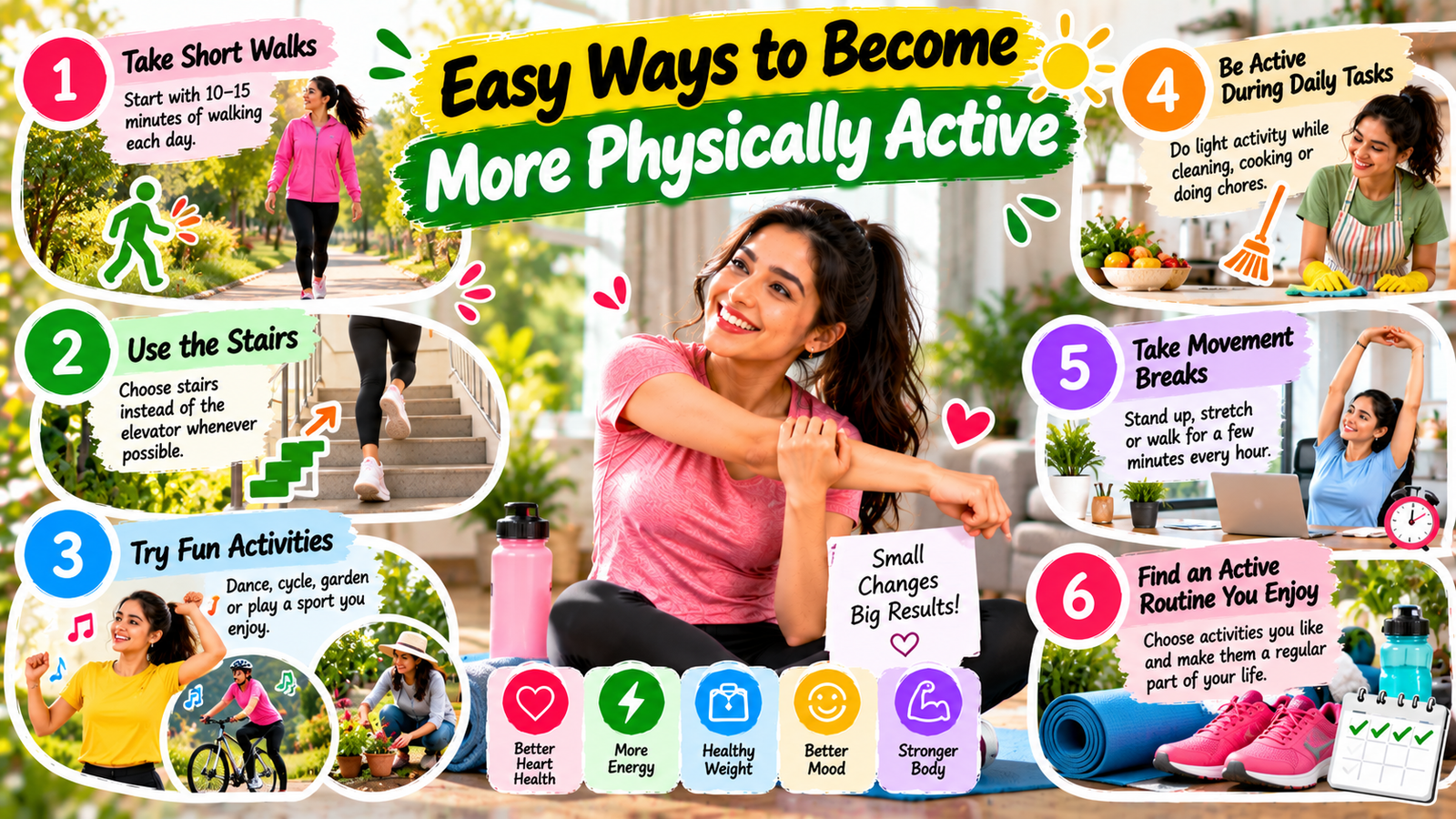
Walking is one of the simplest ways to increase physical activity. You do not need special equipment, although comfortable shoes can make walking more enjoyable.
Try taking short walks during breaks or after meals. If you have a few free minutes, use them for walking instead of remaining seated.
You can also explore your neighborhood or walk in a park when the weather and environment are suitable.
Take Regular Movement Breaks
If you sit for long periods, set reminders to stand up and move around.
A short movement break can involve walking around the room, stretching gently, or simply standing for a few minutes.
I find that small breaks are easier to maintain than expecting yourself to complete a long workout during a busy day.
Use the Stairs When Appropriate
Taking stairs instead of an elevator can add more movement to your daily routine when the stairs are safe and suitable for you.
You do not need to rush. Walk at a comfortable pace and use the handrail if necessary.
For beginners, even a small increase in stair use can be a useful way to add movement.
Make Household Chores More Active
Household tasks can involve plenty of movement. Cleaning, organizing, gardening, washing the car, and other chores can help you spend more time on your feet.
I like the idea of treating these activities as opportunities to move rather than viewing them only as work.
The goal is not to turn every chore into a workout. It is simply to avoid unnecessary inactivity.
Walk While Talking
If you have a phone conversation that does not require you to sit at a desk, consider walking while you talk.
This is a simple habit that can add movement without requiring additional time.
Over several days, these small periods of walking can add up.
Try Short Home Workouts
You do not need an hour for every workout.
A short routine might include chair squats, wall push ups, marching in place, calf raises, and gentle stretching.
You can complete these movements in a small area of your home.
Short workouts are particularly useful on busy days when a longer session is not realistic.
Add Movement to Your Morning
A few minutes of movement in the morning can help you begin the day actively.
You could walk around your home, perform gentle mobility exercises, or complete a short beginner workout.
There is no single perfect morning routine. Choose something simple enough that you can repeat it.
Make Exercise Social
Being active with another person can make physical activity more enjoyable.
You could take a walk with a family member, meet a friend for a walk, or participate in a recreational activity together.
Social exercise can provide motivation and make movement feel less like a chore.
Spend More Time Outdoors
Outdoor activities can naturally encourage movement. Walking, gardening, playing recreational games, or exploring a suitable local area can all provide opportunities to be active.
Even when you are not completing a formal workout, spending time moving outdoors can help break up long periods of sitting.
Dance at Home
Dancing is another simple way to move more.
Put on music you enjoy and move at a comfortable intensity. You can dance for a few minutes or longer depending on your fitness level and available time.
The biggest advantage is that it does not need to feel like traditional exercise.
Make Your Routine Convenient
One reason people struggle with exercise is that it can feel inconvenient.
Try making movement easier to access. Keep comfortable shoes available for walking. Create a small space at home for exercise. Keep your workout routine simple.
The fewer barriers you create, the easier it can be to stay active.
Set Small Daily Goals
Instead of setting an unrealistic goal, choose a few simple daily targets.
You might decide to take a short walk, complete a few movement breaks, or spend some time stretching.
Small goals can gradually become habits.
Reduce Long Periods of Sitting
If you have a sedentary routine, focus on breaking up long periods of sitting.
Stand when appropriate. Walk around during breaks. Stretch gently. Move between tasks.
These small changes may seem insignificant individually, but they can make your daily routine more active.
Find Activities You Actually Enjoy
There is no requirement to enjoy every form of exercise.
If you dislike running, you can walk. If traditional workouts feel boring, try dancing. If you prefer being outdoors, explore walking or recreational activities.
The best physical activity is often the one you are willing to do consistently.
Progress Gradually
If you currently do very little physical activity, increase your movement gradually.
Your body needs time to adapt. You may feel tired when introducing new activities, so give yourself adequate recovery.
As movement becomes easier, you can gradually increase your duration or frequency.
Listen to Your Body
Being more active is beneficial, but you should not ignore significant pain or other concerning symptoms.
If you have a medical condition or injury, ask a qualified healthcare professional about appropriate physical activity.
Exercise should support your health rather than encourage you to push beyond reasonable limits.
Final Thoughts
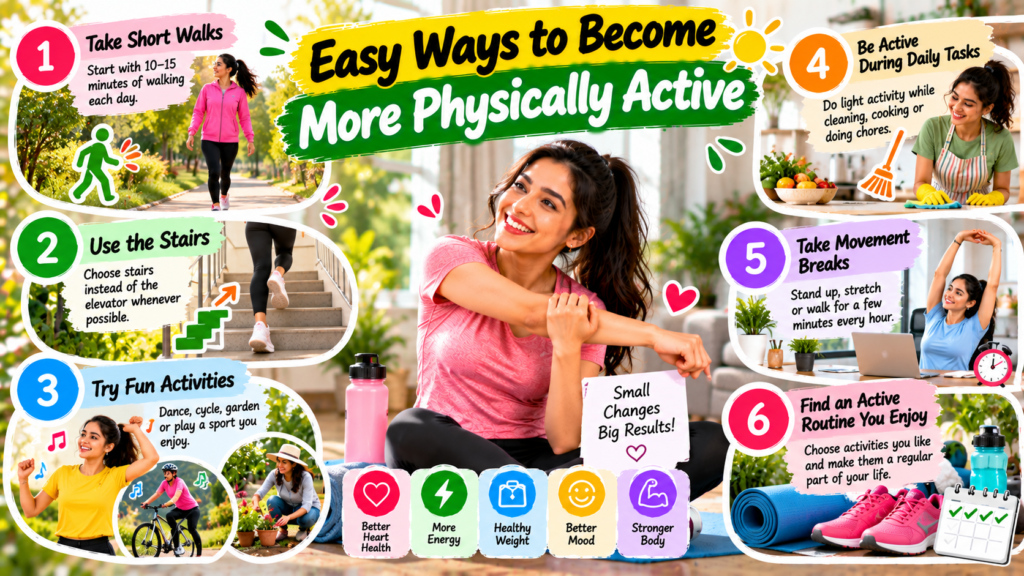
There are many easy ways to become more physically active without completely changing your lifestyle. Walking more, taking movement breaks, using stairs when appropriate, doing household chores, dancing, and completing short home workouts are all practical options.
From my point of view, the biggest advantage of these habits is that they make physical activity part of everyday life. You do not have to wait for the perfect time to exercise. Start with one small change, repeat it consistently, and gradually build a more active lifestyle.