Starting exercise as a beginner can feel confusing, especially when there are so many different workout programs, exercises, and fitness opinions available. In my view, the best way to begin is to keep things simple. You do not need to understand every exercise or follow an advanced fitness program from the beginning.
The first goal should be to make physical activity a regular part of your life. Once exercise becomes a habit, you can gradually learn new exercises and increase your fitness level.
Start With Realistic Goals
Before starting a workout routine, I recommend thinking about what you actually want to achieve. Your goal might be to become more active, improve your strength, support your overall fitness, or simply spend less time sitting.
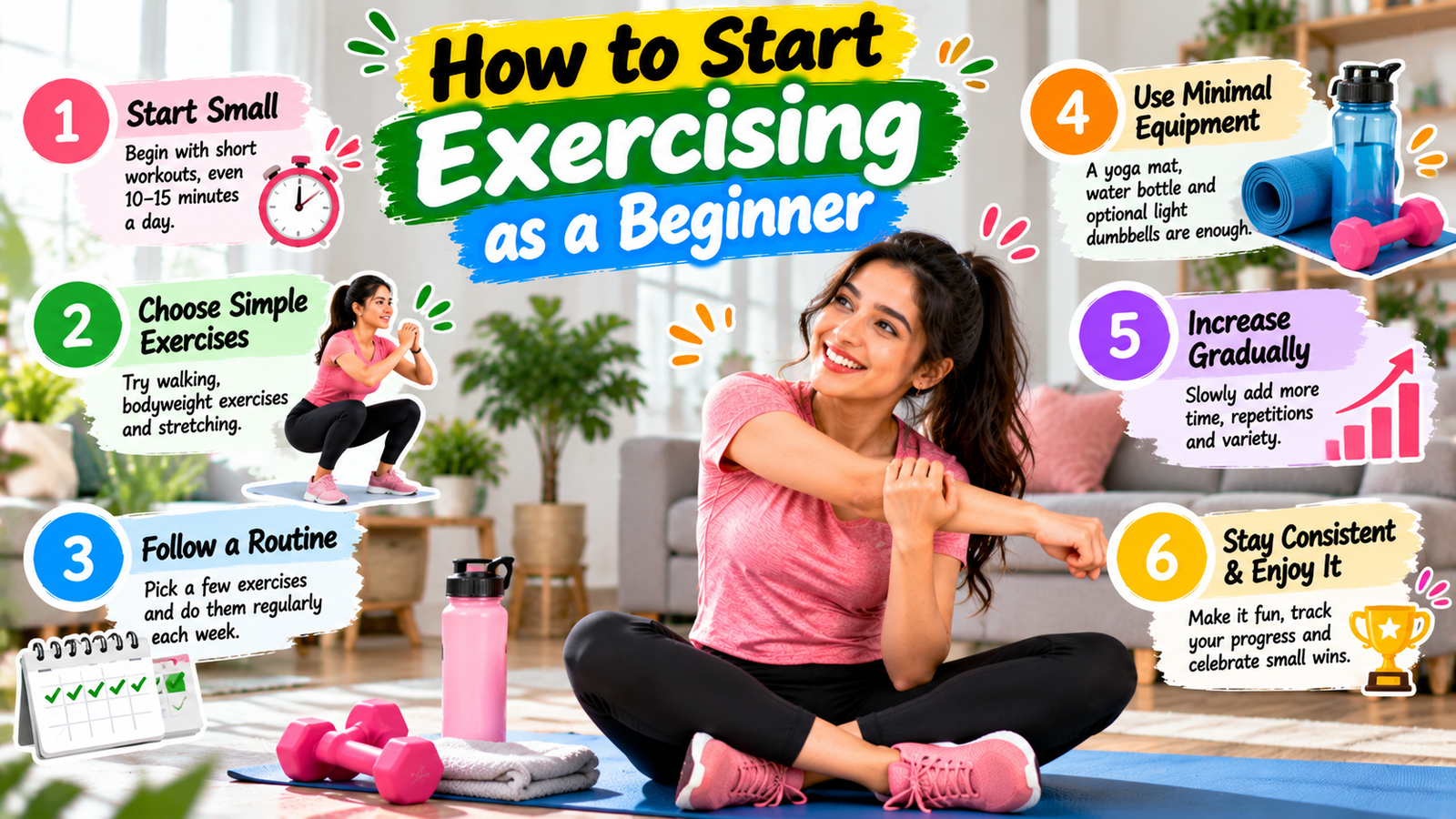
A beginner does not need to set a huge goal immediately. A simple goal such as exercising three times a week can be a good starting point.
Realistic goals also make it easier to stay motivated. When your target feels achievable, you are more likely to continue working toward it.
Begin Slowly
One of the most important beginner exercise tips is to avoid doing too much too soon.
If your body is not used to regular physical activity, suddenly completing long and intense workouts can leave you extremely tired and discouraged.
Instead, begin with short sessions. Even ten to twenty minutes of movement can help you establish an exercise habit.
You can increase your workout time gradually as your body becomes more comfortable.
Choose Activities You Enjoy
Exercise does not have to mean lifting weights or running on a treadmill. Walking, cycling, dancing, swimming, stretching, bodyweight exercises, and recreational activities can all help you become more active.
I think enjoyment is an underrated part of fitness. If you enjoy an activity, you are more likely to repeat it.
Try different beginner friendly activities and pay attention to what feels comfortable and enjoyable.
Learn Basic Exercises
Beginners can benefit from learning a few fundamental movements. Squats can help develop lower body strength. Wall push ups can introduce pushing movements. Glute bridges can work the hips and lower body. Marching can provide simple cardiovascular activity.
There is no need to learn twenty exercises at once.
Learning five or six basic movements properly can provide a useful foundation.
Create a Simple Schedule
A workout schedule makes exercise easier to remember.
For example, you could exercise on Monday, Wednesday, and Saturday. Your workouts do not need to be extremely long.
On days without structured workouts, you can still stay active through walking and everyday movement.
The exact schedule is less important than finding one that works with your lifestyle.
Warm Up Before Exercise
A short warm up can prepare your body for exercise. You can walk around your home, march in place, or perform gentle movements for several minutes.
A warm up can also help you transition mentally from your normal routine into your workout.
After exercising, spend a few minutes slowing down rather than stopping suddenly after intense movement.
Focus on Technique
When beginning exercise, I believe quality is more important than quantity.
Doing a small number of controlled repetitions is generally more useful than rushing through a large number with poor form.
Learn how each movement should feel. Keep your movements controlled and avoid using unnecessary speed.
If you are unsure about an exercise, consider learning from a qualified fitness professional or another reliable educational source.
Include Different Types of Activity
A balanced beginner fitness routine can include several forms of activity.
Aerobic activities such as walking can help you become more physically active. Strength exercises can help you develop muscular fitness. Mobility and stretching activities can help you practice comfortable movement.
You do not have to do everything in one workout. Different activities can be spread across the week.
Make Walking Part of Your Routine
Walking is one of the easiest ways for beginners to increase daily physical activity.
You can take a short walk after a meal, walk while running errands, or spend some time walking outdoors when convenient.
If you currently spend most of the day sitting, adding more walking can be a practical first step.
Track Your Progress
Tracking progress can help you stay motivated. You could write down your workouts in a notebook or use a simple fitness application.
You can record the exercises you completed, how long you exercised, and how you felt afterward.
Progress does not always mean doing more repetitions. You might notice that an exercise feels easier, your daily movement increases, or you feel more confident.
Do Not Compare Yourself With Others
Fitness progress is personal. Someone who has been exercising for years will naturally be able to do things that a beginner cannot.
Comparing yourself with advanced exercisers can make starting feel unnecessarily difficult.
Instead, compare your current ability with where you started.
Small improvements can be meaningful.
Give Yourself Recovery Time
Rest is an important part of a beginner workout routine. Your body needs time to recover, especially when you are introducing new movements.
You do not need to exercise intensely every day.
Light walking or gentle mobility work can be appropriate on easier days, depending on your individual circumstances.
Stay Patient
Fitness does not change overnight. It can take time to develop strength, endurance, coordination, and consistency.
There may also be days when you do not feel motivated. I believe this is normal.
Rather than waiting for motivation every day, create a simple routine that makes exercise easier to follow.
Safety Comes First
Beginners should pay attention to how their body responds to exercise. If an activity causes unusual or severe pain, stop and seek appropriate professional advice.
People with medical conditions, significant injuries, or other health concerns should discuss exercise plans with a qualified healthcare professional before beginning.
Final Thoughts
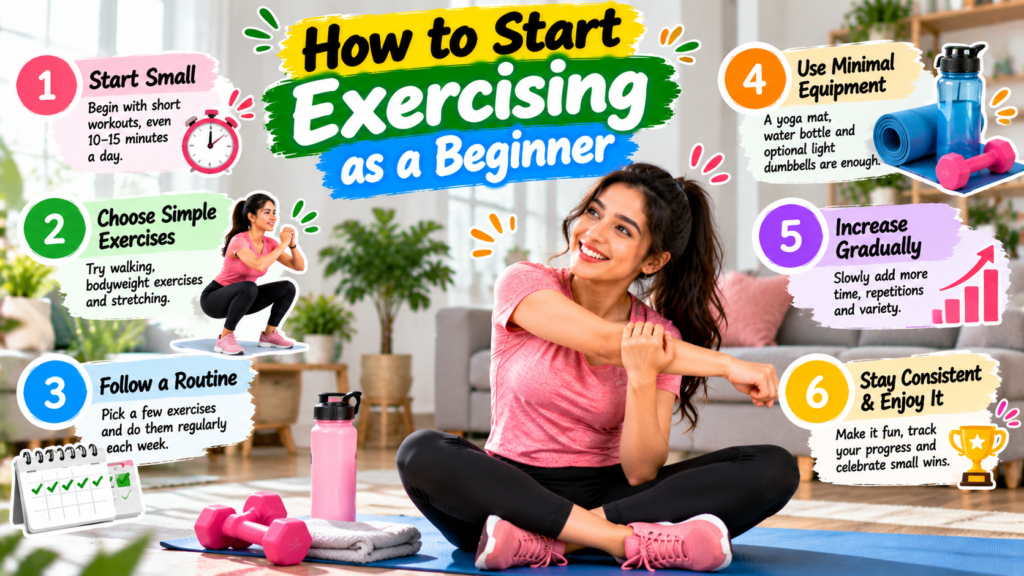
Learning how to start exercising as a beginner does not require a complicated plan. Start with realistic goals, choose activities you enjoy, learn basic movements, and build your routine gradually.
From my perspective, consistency is the foundation of successful exercise. You do not need to be perfect. You simply need to keep moving and make healthy activity a regular part of your lifestyle.