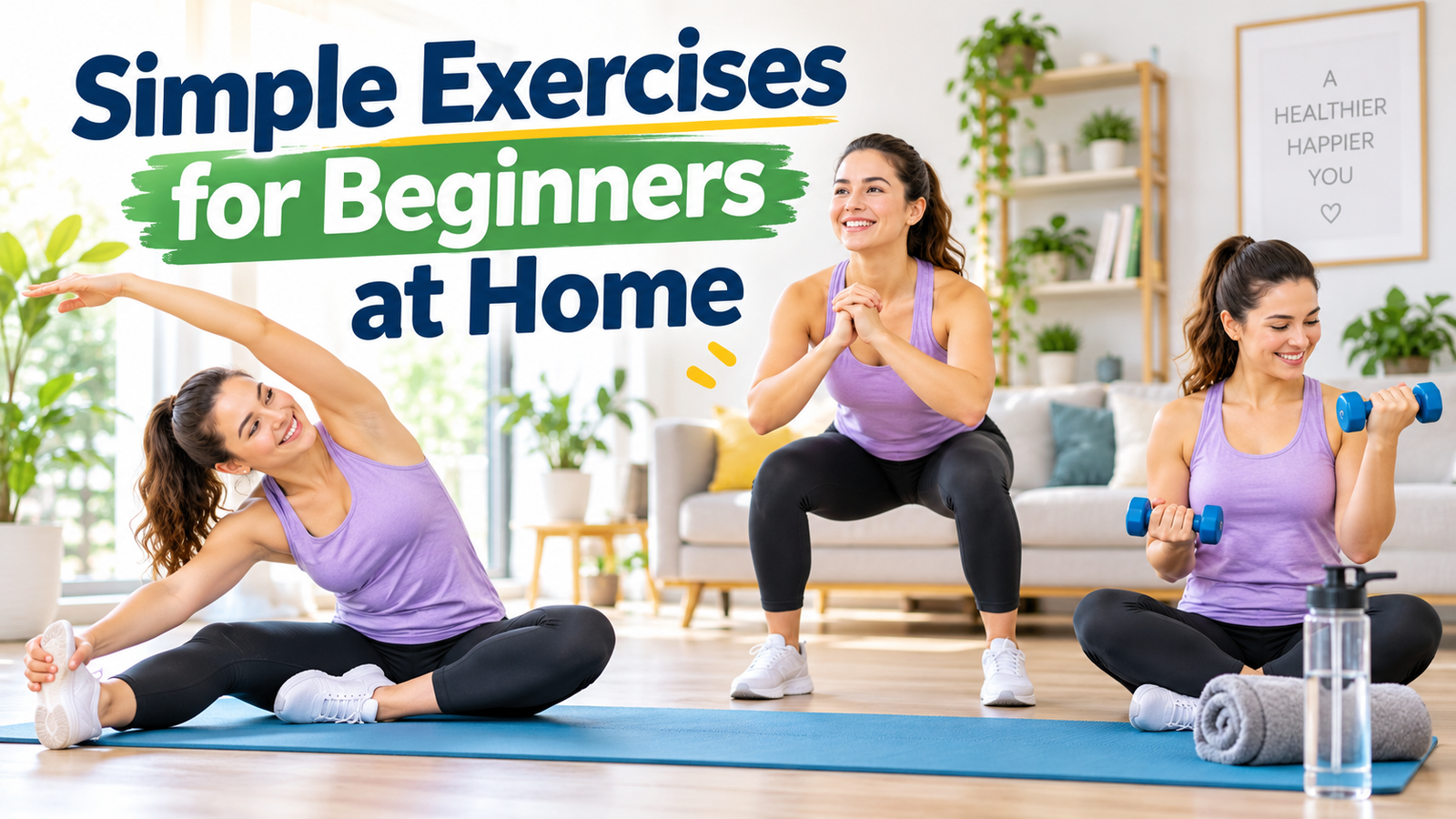
Starting an exercise routine does not have to mean joining an expensive gym or buying complicated fitness equipment. In my experience, some of the simplest exercises can be done comfortably at home with very little space. For beginners, the most important thing is to start slowly, stay consistent, and choose exercises that feel manageable.
When I think about beginner exercises at home, I focus on movements that work different parts of the body without making the routine unnecessarily complicated. Simple exercises such as bodyweight squats, wall push ups, marching in place, glute bridges, and gentle stretching can provide a good starting point for people who have not exercised regularly.
The goal is not to complete an intense workout on the first day. The goal is to build a habit that can become part of your normal lifestyle.
Why Home Exercises Are Good for Beginners
One of the biggest advantages of exercising at home is convenience. You do not need to spend time traveling to a gym. You can exercise in your bedroom, living room, backyard, or any other comfortable space.
Home workouts can also make exercise feel less intimidating. Beginners sometimes feel uncomfortable exercising around experienced people. At home, you can learn the basic movements at your own pace.
Another advantage is flexibility. You can choose a time that works with your daily schedule. Even a short workout can be useful when it is performed consistently.
I also believe that beginners should avoid thinking that a workout only counts when it is long or difficult. Ten or fifteen minutes of physical activity can be a better starting point than trying to complete a demanding routine and giving up after a few days.
Start With a Warm Up
Before doing beginner exercises at home, I recommend spending a few minutes warming up. A warm up prepares the body for movement and can help you feel more comfortable during exercise.
You can start by walking slowly around your room or marching in place. Gentle shoulder circles, arm movements, and easy leg movements can also be included.
A warm up does not need to be complicated. Five to ten minutes of gentle movement is enough for many beginners.
Bodyweight Squats
Bodyweight squats are one of the simplest full body movements beginners can learn. They mainly work the muscles around the legs and hips while also requiring the body to maintain balance.
To perform a basic squat, stand with your feet approximately shoulder width apart. Keep your chest comfortable and slowly bend your knees while moving your hips backward. Lower yourself only as far as feels comfortable, then return to the standing position.
If regular squats feel difficult, you can use a sturdy chair for support. Another option is to practice sitting down and standing up from a chair in a controlled way.
Start with a small number of repetitions and concentrate on comfortable movement rather than speed.
Wall Push Ups
Traditional push ups can be challenging for someone who is completely new to exercise. Wall push ups are an easier alternative.
Stand facing a wall and place your hands against it at about chest height. Keep your body straight and slowly bend your elbows to move toward the wall. Then gently push yourself back.
Wall push ups can help beginners become familiar with the pushing movement before progressing to more difficult variations.
You can start with one or two sets of several repetitions. As you become more comfortable, gradually increase the number.
Marching in Place
Marching in place is an easy way to increase physical activity without needing much space. Simply stand upright and lift one foot at a time while moving your arms naturally.
You can perform this exercise for one or two minutes at first. Later, you can increase the duration.
I like this movement for beginners because it can be adjusted easily. If you feel tired, slow down. If you feel comfortable, increase your pace slightly.
Glute Bridges
Glute bridges are another beginner friendly exercise that can be performed on a comfortable floor surface.
Lie on your back with your knees bent and your feet placed on the floor. Keep your arms beside your body. Slowly lift your hips while keeping your movements controlled, then lower them back down.
The exercise works the muscles around the hips and lower body. Beginners should focus on controlled repetitions instead of trying to lift as high as possible.
Bird Dog Exercise
The bird dog is useful for beginners who want to practice balance and controlled movement.
Start on your hands and knees. Slowly extend one arm and the opposite leg while keeping your body stable. Return to the starting position and repeat on the other side.
If this feels difficult, move only one arm or one leg at a time.
The main purpose is to develop control. There is no reason to rush this exercise.
Calf Raises
Calf raises require very little space. Stand near a wall or sturdy surface if you need support. Slowly raise your heels so that you are standing on the balls of your feet, then lower them.
This simple movement works the calf muscles and can be added to a beginner home workout.
Balance is important, so beginners should use support when necessary.
Gentle Stretching
Stretching can be included after your workout. Gentle stretches may help you relax and become more comfortable with movement.
You can stretch your legs, shoulders, arms, and back using slow and controlled movements. Avoid forcing a stretch or bouncing aggressively.
I prefer keeping stretching comfortable rather than trying to achieve extreme flexibility.
A Simple Beginner Workout
A basic home workout could include marching in place, chair squats, wall push ups, glute bridges, calf raises, and gentle stretching.
For example, you could march in place for a few minutes, perform several chair squats, follow with wall push ups, then do glute bridges and calf raises. Finish with a few minutes of gentle stretching.
The exact number of repetitions depends on your current fitness level. Someone who has not exercised recently should start with a small amount and gradually increase activity.
How to Stay Consistent
Consistency is more important than trying to exercise perfectly. One mistake I see beginners make is setting unrealistic goals. They may decide to exercise for an hour every day and then feel discouraged when they cannot maintain the schedule.
A better approach is to make exercise easy to repeat.
You might begin with three short home workouts per week. On other days, you can simply walk more, use the stairs when appropriate, or spend less time sitting.
As exercise becomes part of your routine, you can gradually increase the duration and intensity.
Listen to Your Body
Exercise should challenge you without making you ignore warning signs. Mild muscle tiredness can be normal when starting a new activity, but sharp or severe pain is not something to push through.
If you have a health condition, recent injury, or concerns about starting exercise, it is sensible to speak with a qualified healthcare professional before beginning a new workout program.
Final Thoughts
Simple exercises for beginners at home can be an excellent way to start becoming more active. You do not need expensive equipment or a complicated fitness program. Basic movements such as squats, wall push ups, marching, glute bridges, and stretching can help you develop a foundation.
From my point of view, the best beginner workout is one that you can actually continue. Start with manageable exercises, focus on good control, and increase your activity gradually. The most important step is simply getting started and making movement a regular part of everyday life.