Building a balanced plate is one of the simplest ways to improve everyday eating habits. In my opinion, healthy eating does not have to involve complicated meal plans or strict food rules. When I think about a balanced meal, I focus on including different types of nutritious foods that provide the body with important nutrients while still making the meal enjoyable.
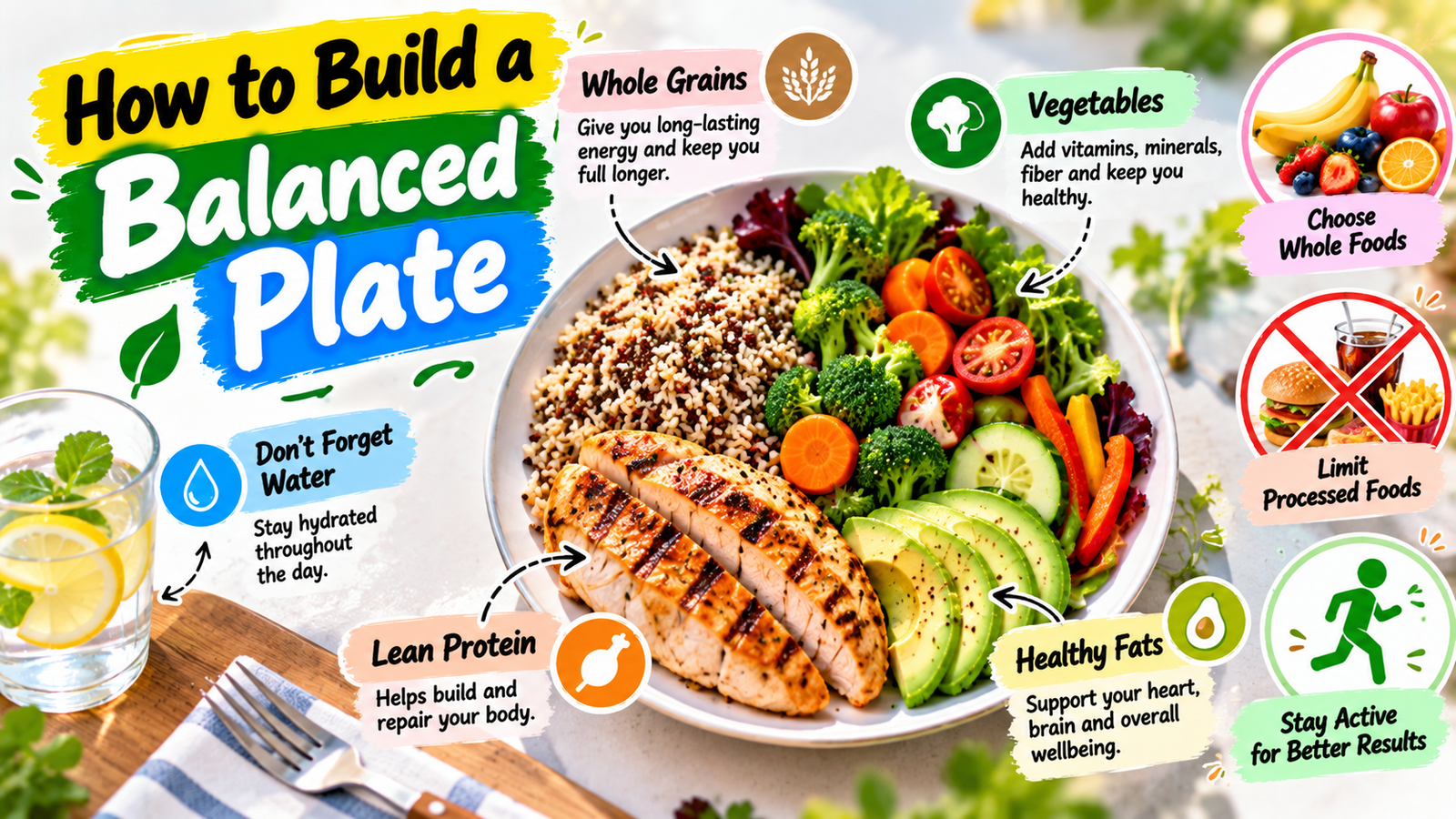
A balanced plate can help you create more variety in your diet and make meals more satisfying. It can include vegetables, fruits, protein, whole grains, and healthy fats in appropriate amounts according to your individual needs.
The good thing is that this approach can work for breakfast, lunch, and dinner.
Start With Vegetables
Vegetables are an important part of a balanced plate. They can provide fiber, vitamins, minerals, and other nutrients.
I like to include different colors and types of vegetables whenever possible. Leafy greens, carrots, tomatoes, peppers, cucumbers, broccoli, and other vegetables can all add variety.
You do not need to eat the same vegetables every day. Changing your choices can make healthy meals more interesting.
Add a Protein Source
Protein is another important part of a balanced meal.
Depending on your preferences and dietary needs, protein can come from foods such as eggs, fish, chicken, beans, lentils, yogurt, tofu, nuts, and other suitable options.
Adding a protein source can make a meal more satisfying.
Include Whole Grains or Other Carbohydrates
Carbohydrates can be part of a healthy diet. Whole grain foods can provide carbohydrates along with fiber and other nutrients.
Examples include oats, brown rice, whole grain bread, whole grain pasta, potatoes, and other suitable foods.
Instead of avoiding carbohydrates completely, I believe it is more useful to consider the quality and portion of the food.
Add Healthy Fats
Healthy fats can also be included in a balanced meal.
Foods such as avocados, nuts, seeds, olive oil, and certain fish can provide useful fats and other nutrients.
The amount you need can depend on your overall diet and individual nutritional needs.
Include Fruit
Fruit can be a simple way to add natural sweetness and nutrients to your meals.
You can include fruit with breakfast, have it as a dessert, or use it as a snack between meals.
Choose different fruits when possible to add variety.
Pay Attention to Portions
A balanced plate is not only about food types. Portion sizes also matter.
Try to avoid filling your plate with one food group while ignoring the others.
The right portion depends on factors such as your age, activity level, body size, health needs, and personal goals.
Make Meals Colorful
One easy way to think about balanced eating is to create variety.
A colorful plate often includes different fruits and vegetables along with other food groups.
This can make meals more visually appealing and encourage you to try a wider range of nutritious foods.
Drink Water With Meals
Water can be a simple beverage choice with meals.
Instead of automatically choosing sugary drinks, consider water or another unsweetened option.
Your hydration needs depend on many factors, but drinking regularly throughout the day is a basic healthy habit.
Do Not Make Meals Complicated
A balanced plate does not require expensive ingredients.
You can make a simple meal using rice, vegetables, beans, chicken, fish, eggs, or other foods that are affordable and accessible to you.
The goal is to create a combination of nutritious foods rather than preparing something complicated every time.
Adjust Your Plate to Your Lifestyle
Everyone has different nutritional needs.
Someone who exercises regularly may have different energy requirements from someone with a sedentary lifestyle.
Your meals should reflect your individual needs and preferences.
If you have a medical condition or specific dietary requirements, consider getting personalized advice from a qualified healthcare professional or registered dietitian.
Make Healthy Food Enjoyable
Healthy eating should not feel like punishment.
Use herbs, spices, vegetables, sauces, and cooking methods that make your meals enjoyable.
When healthy meals taste good, you are more likely to continue eating them.
Final Thoughts
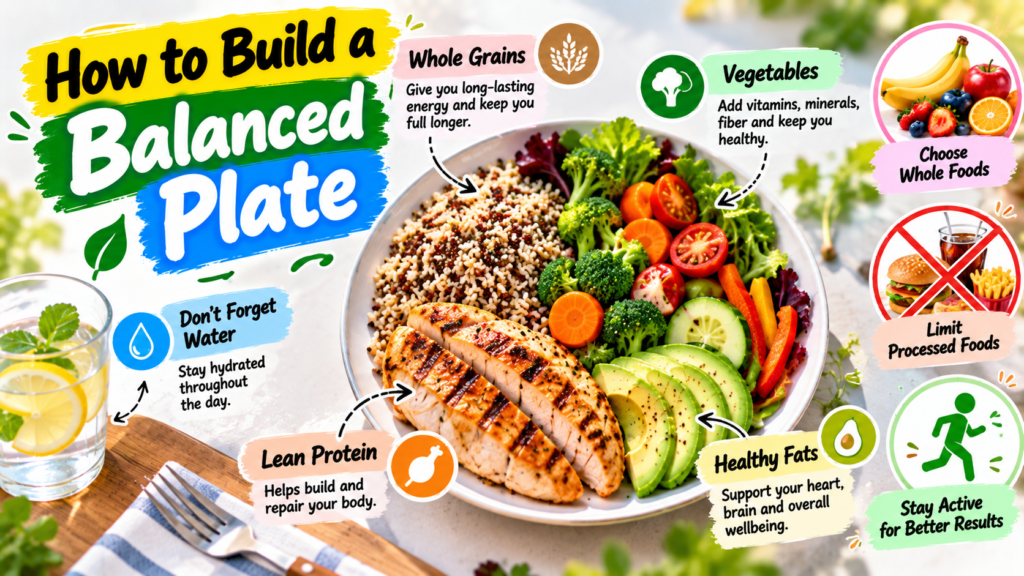
Learning how to build a balanced plate can make healthy eating much easier. Include vegetables, a suitable protein source, carbohydrates, healthy fats, and fruit according to your individual needs.
From my point of view, the goal is not to create a perfect plate every time. The goal is to develop a pattern of balanced meals that you can enjoy and maintain.
Keep your meals simple, colorful, varied, and nutritious. With practice, building a balanced plate can become an automatic part of your everyday eating routine.