Drinking enough water throughout the day is an important part of a healthy daily routine. I have noticed that when I get busy, water is often one of the first things I forget. I may start my morning with good intentions and then suddenly realize that several hours have passed without drinking enough.
For me, the easiest way to improve hydration is not simply focusing on how much water I drink. I also pay attention to when I drink it. Having water at useful points during the day can make hydration feel more natural and easier to remember.
There is no single perfect schedule that works for everyone. Fluid needs can vary depending on activity, weather, diet, age, and individual health. However, there are several convenient times when drinking water can become part of a regular daily routine.
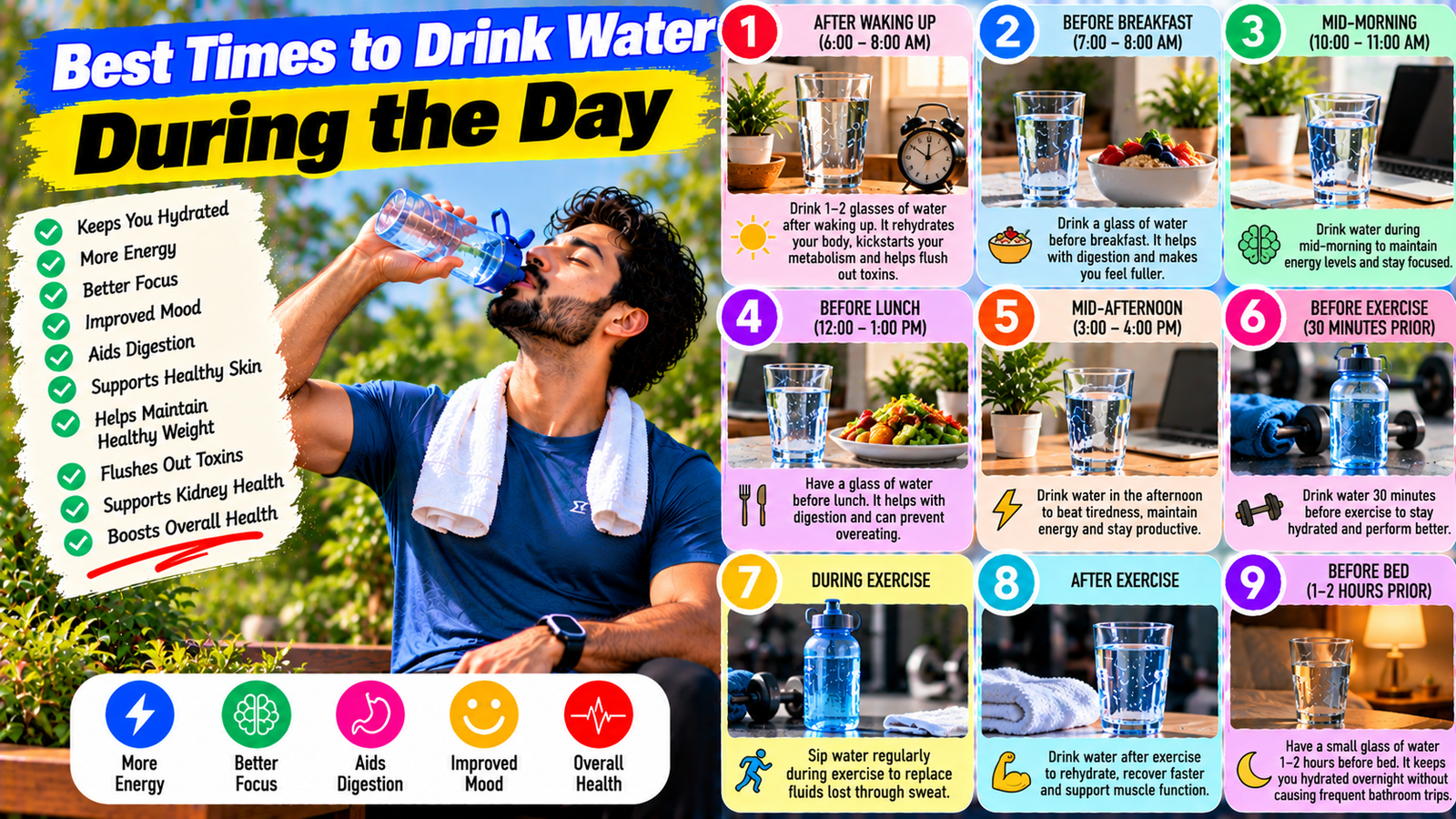
Drink Water After Waking Up
One of the first times I like to drink water is shortly after waking up.
During sleep, I go several hours without drinking anything. The body continues its normal functions during this time, so starting the morning with some water is a simple way to begin the day.
I usually keep a glass or bottle of water somewhere convenient. This removes the need to think about finding water first thing in the morning.
There is no need to force a large amount of water immediately after waking up. A comfortable amount is enough to begin the day.
Drink Water With Breakfast
Breakfast is another natural opportunity for hydration.
When I sit down for breakfast, having water nearby makes it easy to include a drink as part of the meal. This also creates a routine that can become automatic over time.
If breakfast includes foods such as fruit, oatmeal, eggs, or whole grains, water can be a simple beverage choice that does not add unnecessary sugar.
Drink Water During the Morning
After breakfast, I try not to forget about water until lunchtime.
Morning work, study, household responsibilities, and other activities can become distracting. Keeping a bottle beside me helps me remember to drink regularly.
I do not think I need to watch the clock constantly. Instead, I use the water bottle as a visual reminder and take drinks throughout the morning.
Drink Water Before Physical Activity
If I know I am going to exercise, I make sure water is available before I begin.
Physical activity can increase fluid loss through sweating, especially in warm weather. Starting exercise without paying attention to hydration may make it harder to replace fluids later.
The amount of water needed can vary depending on the activity, weather, duration, and individual needs. For ordinary light exercise, having water available and drinking according to thirst and circumstances can be a practical approach.
Drink Water During Exercise
During exercise, hydration becomes particularly relevant when the activity lasts a long time or takes place in hot conditions.
For shorter and less intense activities, plain water may be a convenient choice. Longer activities can create different fluid and electrolyte needs.
I think the important habit is simply remembering to bring water. If I leave the bottle at home, it becomes much harder to stay consistent.
Drink Water After Exercise
After physical activity, I like to have water available so I can replace some of the fluids lost through sweating.
How much is needed depends on how much fluid was lost and the intensity of the activity. A person who has exercised for a long time in hot weather may have different needs from someone who completed a short indoor workout.
Listening to the body and considering the conditions can help guide the routine.
Drink Water With Lunch
Lunch provides another reliable hydration checkpoint.
When I eat lunch, I usually have water with the meal. This is especially useful on busy workdays because it gives me a natural moment to stop and think about hydration.
Making water part of lunch also helps prevent the entire afternoon from passing without drinking anything.
Drink Water During the Afternoon
The afternoon is a time when many people become busy again.
Work tasks, meetings, errands, and study sessions can make it easy to forget about fluids. I like keeping water within reach during this part of the day.
A short break can be a good opportunity to take a few drinks and refill the bottle if necessary.
Drink Water Before or With a Snack
A snack can also become a simple reminder.
If I take an afternoon snack, I can have water at the same time. This creates another routine connection without requiring a separate reminder.
It is a small habit, but repeated small habits can make daily hydration easier.
Drink Water Before Going Outside in Hot Weather
Hot weather deserves extra attention.
When temperatures are high, the body may lose more water through sweating. If I am going outside for an extended period, I prefer to take water with me rather than depending on finding a drink later.
People who work outdoors, exercise outside, or spend significant time in hot conditions may need to pay particular attention to their individual hydration needs.
Drink Water With Dinner
Dinner is another easy point in the day to have water.
After a busy afternoon, drinking water with dinner can help maintain a consistent routine. I prefer making water the normal beverage choice rather than automatically choosing a sugary drink.
Of course, individual preferences vary, but keeping water available makes the healthier choice easier.
Be Careful About Drinking Large Amounts Right Before Bed
Water is important in the evening too, but I try not to drink a very large amount immediately before going to sleep.
For some people, drinking a lot of fluid late at night can increase the need to wake up and use the bathroom. This can interrupt sleep.
Instead, I prefer spreading my fluid intake across the daytime and drinking according to thirst in the evening.
Drink Water When You Feel Thirsty
Although creating a routine can be useful, I do not ignore thirst.
Thirst is one of the body’s natural signals that fluids may be needed. If I feel thirsty during the day, I do not wait for the next scheduled time.
This is especially important during physical activity or hot weather when fluid needs may increase.
Use Meals as Hydration Reminders
One of the easiest strategies is connecting water with meals.
Breakfast, lunch, and dinner happen regularly, so they can become natural reminders. I can also connect water with snacks, exercise, work breaks, and other daily activities.
This is easier for me than trying to remember a complicated drinking schedule.
Keep Water Nearby
The best time to drink water is not very useful if water is difficult to access.
I try to keep a bottle nearby at home, work, or while traveling. When water is visible and convenient, I am much more likely to drink it.
A reusable bottle can also make it easier to monitor how often I refill it without having to count every individual glass.
Does Everyone Need the Same Water Schedule?
No. Individual hydration needs are different.
The amount and timing of fluids can depend on physical activity, climate, food intake, age, body size, and health circumstances.
Someone exercising outdoors in hot weather may need more fluids than someone sitting indoors in a cool environment. Certain medical conditions and medications can also affect fluid requirements.
Because of these differences, I think a flexible routine is better than following an identical schedule copied from someone else.
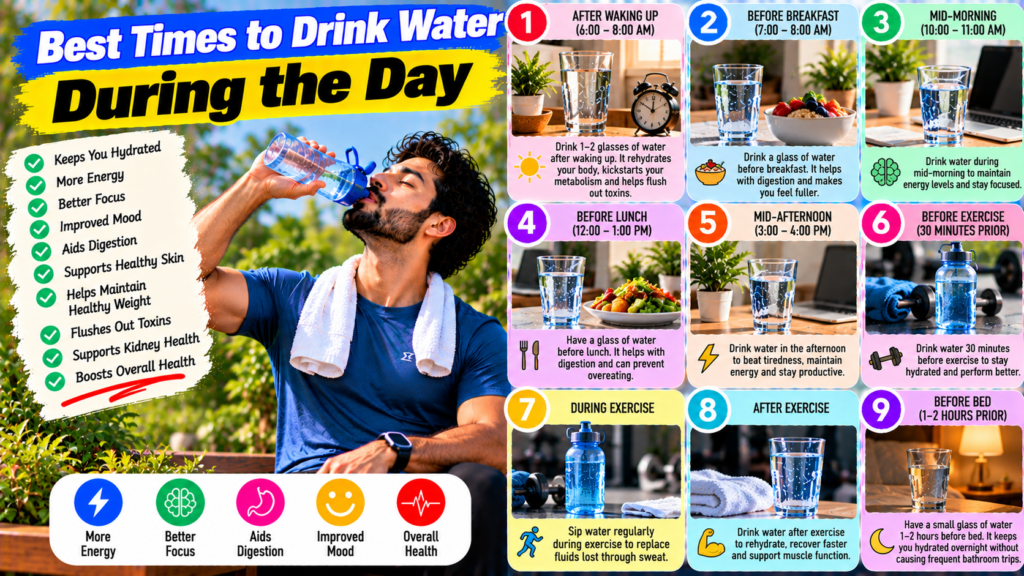
A Simple Daily Hydration Routine
A basic routine could look something like this:
Start the morning with water.
Have water with breakfast.
Keep water nearby during the morning.
Drink around physical activity according to your needs.
Have water with lunch.
Drink regularly during the afternoon.
Have water with dinner.
Drink in the evening according to thirst while avoiding excessive amounts immediately before bed.
This is not a strict prescription. It is simply a practical structure that can help make hydration part of everyday life.
Final Thoughts
There is no single best time to drink water because everyone’s routine and hydration needs are different. However, certain moments make drinking water easier to remember.
For me, the most useful times are after waking up, with meals, during work breaks, around exercise, during hot weather, and whenever I feel thirsty.
The most important thing is consistency. Instead of waiting until the end of the day to think about hydration, I prefer spreading water intake throughout my normal routine.
Drinking water should not feel like a complicated task. By keeping water nearby and connecting it with everyday activities, it becomes much easier to stay hydrated throughout the day.
If you have a medical condition or take medication that affects fluid balance, follow the personalized hydration advice provided by your qualified healthcare professional.